Sunday, June 8, 2014

The Khwajagan Sufi Masters & Balkh (8th C. AD)

**************************

Click Here to View the Main Index

**************************

“All roads lead to Balkh,” uttered Gurdjieff, referring to the Sufic origin of all systems. ....Balkh was referred to as the “Mother of Cities” and the “Elevated Candle” (Sham-i-Bala) and it was in Balkh that the great Prophet Zoroaster was born. It is said he is also interred there, according to the Persian poet Firdousi. For many years, Balkh was the central hub of the Zoroastrian religion......Yesai Narai writes, “Balkh is the town often associated with Padmasambhava, and Rabia and Rumi as well. Although Padmasambhava is usually thought to be Indian, it is possible that he is from the Afghanistan region also associated with his name........Balk is the homeland of Baha ad-Din Naqshband, the greatest of the Khwjaghan Masters. Baha al-Din Walad of Balkh (d. 1230 CE), meaning "the splendor/glory of religion from Balkh" is the designation of the father of Jalal al-Din Balki, more commonly known as Jalal al-Rumi, famed author of the ‘Persian Qur'an/Bible’, the Mathnawi.......In Balkh, Bokhara and also in the Hindu Kush a new “inner circle” of initiates was established. These great initiates were known as the Khwajagan (Persian for "Masters"). The first visible leader who appeared (during this cycle) was Yusuf Hamadani (1048-1140)."......THE RIDDLE OF BALKH “THE ELEVATED CANDLE....By Laurence Gallon

Click on the Map to enlarge.

"Khwājagān (shortened forms: Khwaja, Khaja(h), Khawaja or khuwaja) is a Persian title for "the Master". Khwajagan, as the plural for "Khwāja", is often used to refer to a network of Sufis in Central Asia from the 10th to the 16th century who are often incorporated into later Naqshbandi hierarchies, as well as other Sufi groups, such as the Yasaviyya. In Firdowsi's Shahnama the word is used many times for some rulers and heroes of ancient Iran as well."

"The Khwajagan....highly evolved humans collectively known since the 8th century A.D. as the Khwajagan..... are known to be possessors of phenomenal mystical powers such as Tay al-Ard (telekinesis, thaumaturgical teleportation: the ability to travel throughout the universe within the ‘twinkle of an eye‘, also the term for ‘the ability to appear at different places at one and the same time’), and Kashf and Ilham (highly advanced psychic and telepathic communication) .....Major centers of power from which the Khwajagan operate include the Khurasan (Hindu Kush) region and Afghanistan, and such towns as Bokhara and Balkh......http://sufiqalam.wordpress.com
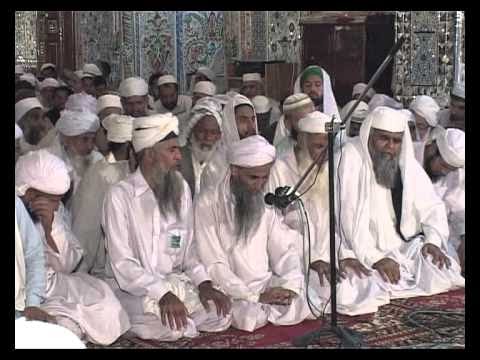
"Interest in the Khwajagan was revived in the 20th century with the publication in Turkey of "Hacegan Hanedani", by Hasan Lutfi Shushud, Istanbul, 1958. His sources included:
Rashahat Ain al-Hayat” (Beads of Dew from the Source of Life: Histories of the Khwajagan: The Masters of Wisdom) by Mawlana Ali ibn Husain Safi, translated by Muhtar Holland
Nefahat el-Uns min Hazerat el-Kuds, A.H. 1289, by Abdurrahman Cami Jami
Risale-i Bahaiyye, by Rif'at Bey
Semerat el-Fuad, by Sari Abdullah
Enis ut-Talibin wa Iddet us-Salikin Makamat-i Muhammed Bahaeddin Nakshibend, by Salahaddin Ibn'i Mubarek el Buhari al-Bukhari

"Paghman is a town in the hills near Afghanistan's capital of Kabul.......Afghanistan's most beautiful place.....Located at the foot of the Hindu Kush mountain range, Paghman became a holiday retreat with villas and chalets, as well as the summer capital......The Kabul River, the only large river in the Kabul province, is fed by springs and snow-melt runoffs from Paghman.

A short translation of Shushud's work by J. G. Bennett was published in “Systematics” Volume 6, No. 4 March 1969, Muhter Holland's full length translation "Masters of Wisdom of Central Asia" was published by Coombe Springs press in 1983. J. G. Bennett also wrote a full length work loosely based on Shushud's original, entitled “The Masters of Wisdom,” which includes some very detailed information about the Khwajagan. Bennett received his information about the Khwajagan from Hasan Shushud (the teacher of the famous Rumi translator Dr. Nevit O. Ergin)

Some authors such as Idries Shah and John Godolphin Bennett maintain that George Ivanovich Gurdjieff's 'Fourth Way' originated with the Khwajagan.

Prominent Central Asian Khwajagan included....

Yusuf Hamadani.......born in Hamadan in North West Persia. He was born in A.D. 1048 in the village of Bozendjid near to Hamadan, near Mt. Elburz whose peaks are visible from the mountains north of Hamadan.....Yusuf of Hamadan ended his life at Bamyin (Bamyan (Dari: بامیان Bāmyān), also spelled Bamiyan and Bamian, is the capital of Bamyan Province in central Afghanistan. ).....at the age of 92, and is buried at Merv....Although well-versed in orthodox Sufism, he introduced new techniques, especially that of the group or Halka and the use of conversations-Sohbet-for the purpose not so much of teaching as of transmitting the spiritual force or Baraka that was one of the principal characteristics of the School of the Masters."

"Baraka is a prominent concept in Islamic mysticism, particularly Sufism. It pervades Sufi texts, beliefs, practices, and spirituality. Sufism emphasizes the importance of esoteric knowledge and the spiritual union with God through the heart. Baraka symbolizes this connection between the divine and the worldly through God's direct and intentional blessing of those that are most reflective of Him and his teachings......Baraka is not a state, it is a flow of blessings and grace. It flows from God to those that are closest to God, such as saints and prophets. Those that have received baraka are thought to have the abilities to perform miracles (karamat), such as thought-reading, healing the sick, flying, and reviving the dead....However, according to Abd al-Karīm ibn Hawāzin Qushayri, a prominent Sufi mystic, the use of these miracles and the actual possession of these abilities are not indicative of a saint's status, however, the performance of these miracles by prophets is important to establish credentials...."....... Ernst, Carl (1997). The Shambhala Guide to Sufism. Boston: Shambhala Publications, Inc.

Khwaja Ahmad Yasavi....the founder of the Turkish branch of the Masters, the third successor of Yusuf Hamadani, Khwaja Ahmad Yesevi. In the eleventh and twelfth centuries, there were many famous Turkish Sheikhs in Central Asia, but he was regarded as the foremost. He was born in 1042 AD in Eastern Turkestan, now the Sinkiang Province of China, at Yesi on the Havasu River. He died in A.D. 1166."....THE MASTERS OF WISDOM OF CENTRAL ASIA by J. G. Bennett,....Istanbul 1958.

Abdul Khaliq Gujduvani.....Khwaja Abdubalik Gudjduvani, was the Grand Master of the Inner Circle of the Masters of his time. Gudjduvan was a large village 18 miles) from Bokhara.... part of the kingdom of Harzem (usually spelled Khwarazm), soon to be destroyed by the Mongolian Jenghis Khan......among his chief innovations was the `prayer of the heart', (Zikr-i-Qalbi), not previously known to the Sufis and said to have been imparted to him directly by the Prophet Khidr.....(But most probably derived from the mantras practised by the Buddhist monks of the Hindu Kush.)

Baha-ud-Din Naqshband Bukhari.....When Abdulhalik died in A.D. 1190, he was succeeded by Khwaja Ahmed Sadik of Bokhara. About this time, it seems that the Inner Circle of the Masters was transferred to Bokhara, where it remained for centuries.

Amir Kulal
Nur ad-Din Abd ar-Rahman Jami

Beads of Dew from the Source of Life by Mawlana Ali ibn Husain Safi,
Gurdjieff: A Very Great Enigma by J.G. Bennett
Masters Of Wisdom: An Esoteric History of the Spiritual Unfolding of Life on This Planet by J.G. Bennett
Masters Of Wisdom of Central Asia by Hasan Shusud
The Teachers of Gurdjieff by Rafael Lefort
The Naqshbandi Sufi Way, History and Guidebook of the Saints of the Golden Chain by Shaykh Muhammad Hisham Kabbani, Kazi Publications, USA (1995)

**************************

Email....okarresearch@gmail.com

John Hopkins.....Northern New Mexico….June 2014

**************************

Monday, June 2, 2014

Begram ... Kapisa ... Alexandria of the Caucasus (320 BC)

**************************

Click Here to View the Main Index

**************************

"Bagram (بگرام Bagrām), founded as Alexandria on the Caucasus and known in medieval times as Kapisa, is a small town and seat in Bagram District in Parwan Province of Afghanistan, about 60 kilometers north of the capital Kabul. It is the site of an ancient city located at the junction of the Ghorband and Panjshir Valley, near today's city of Charikar, Afghanistan......The location of this historical town made it a key passage from Ancient India along the Silk Road, leading westwards through the mountains towards Bamiyan."

"By 669 AD, the neighboring Turkish Shahi kingdoms of Kapisa (Shambhala) and Uddiyana were also both being hard pressed on their southwesterly flank by the inexorable expansion of the southern Arab Moslems."….http://www.dharmafellowship.org

Begram ... Alexandria of the Caucasus (320 BC)....."It is unknown when the site was originally settled. In the mid 500s BC, Cyrus the Great of the Persian Achaemenid Dynasty destroyed the city as part of his campaign against the Saka nomads in the region. The town, however, was soon rebuilt by his successor Darius I......around 1500 BC the country became populated by the Indo-Aryans moving in from the west. Afghanistan doesn’t enter written history until around the 6th century BC, when it became part of the Achaemenid Empire of Cyrus the Great. The Persians were the world’s superpower of the time, and Afghanistan was divided into satrapies – Ariana (Herat), Arachosia (Kandahar), Bactria (Balkh) and Gandhara (the Kabul Valley).....The Cambridge Ancient History, Volume 10

"In the 320s BC, Alexander the Great captured the city and established a fortified colony named Alexandria of the Caucasus. The new town, laid out in the "hippodamian plan" or iron-grid pattern—a hallmark of Greek city planning, had brick walls reinforced with towers at the angles. The central street was bordered with shops and workshops......in 334 BC Alexander the Great launched a huge campaign against Darius III. Just 24 years old, Alexander’s military genius quickly conquered the Mediterranean coast and the Achaemenid capital at Persepolis in modern Iran. His kingdom in ruins, Darius fled to Afghanistan where he was betrayed by the Bactrian satrap Bessus, who in turn proclaimed himself king. Alexander was outraged and led his army deep into Afghanistan, sweeping through the south before crossing the Hindu Kush and driving Bessus towards the Oxus (Amu Darya). He captured Bactria and Bessus, who was executed for his resistance......Afghanistan got deep into Alexander’s blood. He took his bride Roxanne in Balkh, and founded Bagram as a base for his invasion of India....Further north, Ai Khanoum on the Oxus, the easternmost Greek city in the world was a place of gymnasiums and theatres performing the Greek tragedies, temples to the old gods and groves of olive trees."

"After his death in 323 BC, the city passed to his general Seleucus, who traded it with the Mauryans of India in 305 BC. After the Mauryans were overthrown by the Sunga Dynasty in 185 BC, the Greco-Bactrian Kingdom invaded and conquered northwestern India (present-day Pakistan) with an army led by Demetrius I of Bactria. Alexandria became a capital of the Eucratidian Indo-Greek Kingdom after they were driven out of Bactria by the Yuezhi in 140 BC.

".......the Kingdom of Uddiyana was divided between two countries, to the North and South. To the North, it bordered on the land of Shambhala (i.e., the Kingdom of Kapisa),"......….http://www.dharmafellowship.org

"Bagram became the capital of the Kushan Empire in the 1st century, from here they invaded and conquered Peshawar in the south...it was the Yueh-chih in 130 BC that had the greatest impact, when they united under the name of the Kushans. The Kushans soon settled, and took the best traditions from the Graeco-Bactrians and the Indians to fuse them with the free-spirited nature of the steppe. In doing so they created a unique culture that ruled Afghanistan for five centuries. The new kingdom was ideally placed to exploit the burgeoning trade along the Silk Road. From AD 128, the visionary King Kanishka built two capitals at Kapisa (modern Bagram) and Peshawar, forging an empire whose influence travelled as far as the Ganges. Kushan art, also known as Gandharan art, was a vibrant blend of Classical, Indian and Persian styles, and was hugely influential. The kingdom was the first to represent the Buddha in human form, a style it sent to Kashmir, Tibet and China. Monasteries thrived in Balkh, Kandahar, Bamiyan, Samangan, and Hadda near Jalalabad."

"Caucasus Indicus Mountains....."In the time of Alexander the Great, the Hindu Kush range was referred to as the Caucasus Indicus or the "Caucasus of the Indus" (as opposed to the Greater Caucasus range between the Caspian and Black Seas).......Hindū Kūh (ھندوکوه) and Kūh-e Hind (کوهِ ھند) are usually applied to the entire range separating the basins of the Kabul and Helmand rivers from that of the Amu River (ancient Oxus), or more specifically, to that part of the range lying northwest of the Afghan capital Kabul. Sanskrit documents refer to the Hindu Kush as Pāriyātra Parvata (पारियात्र पर्वत)......Some sources state that the term Hindu Kush originally applied only to the peak in the area of the Kushan Pass, which had become a center of the Kushan Empire by the 1st century AD. This mountain range was also called Paropamisadae by Hellenic Greeks in the late first millennium BC."......."Hindu Kush Mountains.....Britannica

"The "Bagram treasure" ....... Bagram was a great city in ancient times. In the 1930s, French archaeologists found an astonishing cache of items there. .....Among the objects was a Roman toy aquarium made of bronze, in which metal fish would float, waggling their fins, when it was filled with water.....Glass beakers from Bagram are painted with figures resembling Pompeian frescoes. Most remarkable were a series of ivory carvings resembling the styles of southern India.....The Bagram treasures make the point that Afghanistan is a point of cultural interchange, where currents from India, Europe, China, Iran, Central Asia and the Middle East all met. Even more startling, historically, are the finds from Ai Khanum, a Greek colony founded around 300 B.C. by one of the successors of Alexander the Great. Following his conquests, for over a century a Greek empire covered much of the territory of modern Afghanistan."......British Museum Exhibition Catalogue

"Cyrus the Great...... In the Bīsotūn inscrip­tion, Darius mentioned among the countries of the Persian empire Drangiana, Areia, Choresmia, Bactria, Sogdiana, Gandhara, Sattagydia, and Arachosia .....As Darius’ predecessor, Cambyses II, had fought no wars in the east, Persian rule must already have been extended to Central Asia and the northwestern limits of India in the time of Cyrus. The fortified settlement of Cyreschata (“city of Cyrus”), or Cyropolis, in Sogdiana is further evidence of Cyrus’ activity in the region ....Pliny (Naturalis Historia 6.92) reported that Cyrus destroyed Capisa, in northern Afghanistan, and Arrian mentioned both his attack “on the land of the Indians” (apparently Gandhara) and his subjuga­tion of the people of the Ariaspai along the southern borders of Drangiana......According to both Herodotus.... and Berossus, this conquest of the Central Asian territories took place after the defeat of Lydia in 547 B.C.E. but before the Persian advance on “Assyria” (i.e., Babylonia) in 539 B.C.E.".....http://www.iranicaonline.org

"CAPISA (Κάπισα or Κάτισα, Capissa), a city of a district probably named after it, CAPISSENE and included in the wider district of the Paropamisus or Hindu Kush mountains. According to Pliny, it was destroyed by Cyrus; but we have no reason for supposing that Cyrus ever got so far NE., and, if it had been, it would hardly have been noticed by Ptolemy. It is probably the same as the Caphusa of Solinus (100.54), which was near the Indus. It has been suspected that Capissene represents the valley of the Kábul river, and Capisa the town on the Indus now called Pesháwar. It is not Kábul, which has been satisfactorily proved by Professor Wilson to occupy the site of the ancient Ortospanum. .....Lassen finds in the Chinese annals a kingdom called Kiapiche in the valley of Ghurbend, to the E. of Bamian. It is very probable that Capisa and Kiapiche are identical.".....Dictionary of Greek and Roman Geography (1854) ......William Smith, LLD, Ed.

Calcutta Review, Volume 54

Kalabagh......".....on the western bank of Indus (Sita) River. ..... 'Kala' is a typical Pashtu word meaning 'village' or 'dhok', and 'Bagh' means 'garden'. Hence 'Kalabagh' simple means 'Garden Village' in local language.......Similar names of some other nearby towns are "Kot Kala" ("Fort village"), "Sarai Kala" ("Sarai village" or "Inn village") or "Samundar Khan Kala" ("village of Samundar Khan")."

**************************

Email....okarresearch@gmail.com

John Hopkins.....Northern New Mexico….June 2014

**************************

Sunday, June 1, 2014

Parwan & Panjshir Valleys ... Ghorband River & Village of Sambala

**************************

Click Here to View the Main Index

**************************

John Wood (1839)…."Late in the evening we arrived, very weary and somewhat disheartened, at the bottom of a deep valley, along which was scattered a village named Sambala.....we emerged a short time later, into the Parwan Valley, at the village of I-angheran."........A Journey to the Source of the River Oxus.....By John Wood (1839 Expedition)

"The Panjshir Valley (also spelled Panjsheer or Panjsher; Persian: درهٔ پنجشير‎ - Dare-ye Panjšēr; literally Valley of the Five Lions) is a valley in north-central Afghanistan, 150 km north of Kabul, near the Hindu Kush mountain range. Located in the Panjshir Province it is divided by the Panjshir River. The valley is home to more than 140,000 people, including Afghanistan's largest concentration of ethnic Tajiks...Panjshir, literally meaning "Five Lions", refers to five Wali (literally, protectors), highly spiritual brothers who were centered in the valley. ."

Website of His Holiness the 17th Gyalwa Karmapa, Urgyen Trinley Dorje………."Legend reports that Vasubandhu came from the "Kingdom of Shambhala' (approximately, modern Begram, otherwise known as the ancient kingdom of Kapisha, north of Kabul) located in the Afghanistan region, north-west of Peshawar....Bagram (بگرام Bagrám), founded as Alexandria on the Caucasus and known in medieval times as Kapisa, is a small town and seat in Bagram District in Parwan Province of Afghanistan, about 60 kilometers north of the capital Kabul….in the old tradition of the 84 Mahasiddhas that the Kingdom of Uddiyana was divided between two countries, to the North and South. To the North, it bordered on the land of Shambhala (i.e., the Kingdom of Kapisa)"…….….http://www.dharmafellowship.org/biographies/historicalsaints/pramodavajra.htm

"John Wood (1839)…."…Parwan Valley.....Late in the evening we arrived, very weary and somewhat disheartened, at the bottom of a deep valley, along which was scattered a village named Sambala. "Its male inhabitants, armed to the teeth….kept hovering about the encampment…..we were early astir next morning, and anxious to quit what was rightly considered a dangerous neighborhood…..None of the villagers were stirring….we moved slowly forward, winding along the sides of the mountain…until we reached a shallow ravine….on the opposite bank stood a tower commanding ascent on that side…we were soon surrounded by armed men….an old woman stepped forward to the edge of the ravine and stayed the hand of her highly offended countrymen….the shrill piercing voice of the woman rose high above the rest….Her garments hung in tatters, and her manners and gesticulations were fierce and wild…her eloquence was successful and we were permitted to move on….we emerged a short time after sunset, into the Parwan Valley, at the village of I-angheran."........A Journey to the Source of the River Oxus.....By John Wood, Sir Henry Yule

Afghanistan's Magnificent Panjshir Valley.....Valley of the Five Lions

"In 870/871 AD , Ya'qub marched against the Kharijites of Herat, and defeated them. He then marched towards Karukh, and defeated another Khariji leader who was named Abd al-Rahman. Ya'qub then pardoned Abd al-Rahman and made him governor of Isfizar.....His army would later march to Ghazna, Kabul, and Bamyan, conquering these territories in the name of Islam by appointing Muslim governors. From there they moved to north of the Hindu Kush and by 870 AD the whole of Khorasan was brought under their control. The Panjshir Valley was now under Ya'qub's control....."....Bosworth, C.E. (1975). "The Ṭāhirids and Ṣaffārids".

********************************************************************

Ghorbund/Ghorband....Ghorband District (ولسوالی غوربند) is a district of Parwan Province, Afghanistan. Ghorband is located in the southern foothills of Hindu Kush and forms the western boundary of the ancient valley of Koh Daman. It is located 50 km from Kabul, the capital of Afghanistan......Ghorband is a river of Afghanistan, flowing through Parwan Province. It is a tributary of the Panjshir River, then a sub-tributary of the Indus River, then the Kabul River.

********************************************************************

Panjshir Valley......The Panjshir Valley (also spelled Panjsheer or Panjsher; Persian: درهٔ پنجشير‎ - Dare-ye Panjšēr; literally Valley of the Five Lions) ......Ya'qub then pardoned Abd al-Rahman and made him governor of Isfizar.....His army would later march to Ghazna, Kabul, and Bamyan, conquering these territories in the name of Islam by appointing Muslim governors. From there they moved to north of the Hindu Kush and by 870 AD the whole of Khorasan was brought under their control. The Panjshir Valley was now under Ya'qub's control

Panjsher Province (Panjsheer Province; Panjshir Province; Panjsher Valley; Panjshir Valley), Afghanistan .....This province was created from the northeastern districts of Parvan Province. It is virtually identical with the upper part of the Panjsher Valley and its catchment. A map of the present (2011) administrative divisions of Panjsher Province is provided . Note that Bazarak and Rukha towns are located in Unaba District, and not in Bazarak and Rukha districts, respectively, as the district names suggest. Also note that Bazarak town is erroneously indicated on the Google map at the place of Barak village.

********************************************************************

Parwan Valley, at the village of I-angheran.(John Wood)....Bagram (بگرام Bagrám), founded as Alexandria on the Caucasus and known in medieval times as Kapisa, is a small town and seat in Bagram District in Parwan Province of Afghanistan, about 60 kilometers north of the capital Kabul

********************************************************************

Kafiristan....Nūrestān, Afghanistan.....Nuristān (Persian/Nuristani/Pashto: نورستان‎), also spelled Nurestān or Nooristan, is a region in Afghanistan embedded in the south of the Hindu Kush valleys. Its administrative center is Parun. It was formerly known as Kafiristan ("land of the unbelievers") until the inhabitants were converted to Islam in 1896, and thence the region has become known as Nuristan ("Land of Light").

********************************************************************

Peshawar, Pakistan...... the "Kingdom of Shambhala' (approximately, modern Begram, otherwise known as the ancient kingdom of Kapisha, north of Kabul) located in the Afghanistan region, north-west of Peshawar.

********************************************************************

Roads to Bamiyan.....
1. From Kabul there are two very rough dirt roads to Bamiyan, the southern route through Wardak Province and across Hajigak Pass and the northern route from the road heading north from Kabul, near Charikar. From Charikar it goes through Parwan Province, passing Ghorband towards Shibar Pass (some 2 900 m) ......
2. From Herat it is a very long and hard multi-part journey via the minaret of Jam, taking at least 3 days.....
3. From Mazar-e Sharif the old route to Kabul runs through Bamiyan.

**************************

Email....okarresearch@gmail.com

John Hopkins.....Northern New Mexico….June 2014

**************************

Saturday, May 31, 2014

Ya'qub al-Saffar (840 – 879) & the Islamic Conquest (870 AD)

**************************

Click Here to View the Main Index

**************************

"......870 A.D. marks the first time that the Kingdom of Shambhala actually came under Moslem domination…".....Dharma Fellowship of His Holiness the 17th Gyalwa Karmapa

"Legend reports that Vasubandhu came from the "Kingdom of Shambhala' (approximately, modern Begram, otherwise known as the ancient kingdom of Kapisha, north of Kabul) located in the Afghanistan region, north-west of Peshawar....Bagram (بگرام Bagrám), founded as Alexandria
on the Caucasus and known in medieval times as Kapisa, is a small town and seat in Bagram District in Parwan Province of Afghanistan, about 60 kilometers north of the capital Kabul….in the old tradition of the 84 Mahasiddhas that the Kingdom of Uddiyana was divided between two countries, to the North and South. To the North, it bordered on the land of Shambhala (i.e., the Kingdom of Kapisa)……
Website of His Holiness the 17th Gyalwa Karmapa, Urgyen Trinley Dorje………..
….http://www.dharmafellowship.org/biographies/historicalsaints/pramodavajra.htm"….

"Ya'qub claimed the inheritance of the kings of Persia and sought "to revive their glory," and thus in 867 he sent a poem written by himself to the Abbasid caliph Al-Mu'tazz. The poem said: "With me is the Derafsh Kaviani, through which I hope to rule the nations.".....In 870/871, Ya'qub marched against the Kharijites of Herat, and defeated them. He then marched towards Karukh, and defeated another Khariji leader who was named Abd al-Rahman. Ya'qub then pardoned Abd al-Rahman and made him governor of Isfizar.....His army would later march to Ghazna, Kabul, and Bamyan, conquering these territories in the name of Islam by appointing Muslim governors. From there they moved to north of the Hindu Kush and by 870 AD the whole of Khorasan was brought under their control. The Panjshir Valley was now under Ya'qub's control....."....Bosworth, C.E. (1975). "The Ṭāhirids and Ṣaffārids".

"The Islamic conquest of Afghanistan (642–870) began in the middle of the 7th century after the Islamic conquest of Persia was completed, when Arab Muslims defeated the Sassanid Empire at the battles of Walaja, al-Qādisiyyah and Nahavand. The Muslim Arabs then began to move towards the lands east of Persia and in 652 captured the city, Herat. By 667, the Afghan area was under invasion by the Arabs but in 683 Kabul revolted and completely routed the invading army which was led by the Governor of Seistan. It was not until 870 that Kabul and the Afghan area was brought under control by the Saffarids. The near-complete conversion of Afghanistan to Islam was during the period of the Ghaznavids in the 10th century, with Kafiristan holding out until the 1890s."......Ancient Indian History and Civilization, by Sailendra Nath Sen

"... the succession of Islamic dynasties that emerged from the fractured Abbasid empire by their general geographic location......Khorasan (modern Iran, Afghanistan and Turkmenistan):
Samanids (819–999 CE)......The Samanid dynasty (Persian: سامانیان‎, Sāmāniyān), also known as the Samanid Empire, or simply Samanids (819–999),was a SunniPersian Empire in Central Asia, named after its founder Saman Khuda, who converted to Islam despite being from Zoroastrian nobility. It was a native Persian dynasty in Greater Iran and Central Asia after the collapse of the Sassanid Persian empire caused by the Arab conquest.
Ghaznavids (962–1168)
Seljuks (1034–1194)
Ghurids (1011-1215)
Khwarazmians (1077–1231)
Mongol Empire & the Ilkhanate (1231–1335)

"The Samanid dynasty (Persian: سامانیان‎, Sāmāniyān), also known as the Samanid Empire, or simply Samanids (819–999), was a Sunni Persian Empire in Central Asia, named after its founder Saman Khuda, who converted to Islam despite being from Zoroastrian nobility. It was a native Persian dynasty in Greater Iran and Central Asia after the collapse of the Sassanid Persian empire caused by the Arab conquest......they reigned for 180 years, encompassing a territory which included Greater Khorasan (including Kabul)......With their roots stemming from the city of Balkh (then, part of Greater Khorasan) the Samanids promoted the arts, giving rise to the advancement of science and literature, and thus attracted scholars such as Rudaki, Ferdowsi, and Avicenna. While under Samanid control, Bukhara was a rival to Baghdad in its glory. Scholars note that the Samanids revived Persian more than the Buyids and the Saffarids, while continuing to patronize Arabic to a significant degree. Nevertheless, in a famous edict, Samanid authorities declared that "here, in this region, the language is Persian, and the kings of this realm are Persian kings."......"....The History of Iran By Elton L. Daniel,

"Saman Khuda (Saman Khoda, Saman-khudat) was an 8th century Persian noble whose descendants (the House of Saman) later became rulers of Persian (the Samanid Empire). He was a Dehqan from the village of Saman in Balkh province in present-day northern Afghanistan (then part of Persia). In the early 8th century, he came to Merv, seat of the Caliphal governor of Khorasan, Asad ibn 'Abd Allah al-Qasri (ruled 723-727). Saman was originally a Zoroastrian,. But he was so impressed with the piety of Asad ibn 'Abd-Allah al-Qasri, the Caliphal governor of Khorasan, that he converted to Islam....Saman Khuda's grandsons were governors of Samarkand, Ferghana, Shash and Ustrushana, and Herat in recognition of their role in the suppression of a revolt...."....Shamsiddin Kamoliddin, "To the Question of the Origin of the Samanids", Transoxiana 10 (July 2005).

Kabul Shahis......."The area had been under the rule of the Buddhist and then Hindu dynasty called the Kabul Shahis since the 5th century. The Arabs were unable to succeed in converting the population because of constant revolts from the mountain tribes in the Afghan area. The Hindu Shahi were defeated in the early part of the 10th century by Mahmud of Ghazna who ruled between 998 and 1030. He expelled the Hindus from Gandhara.......Earlier in 870, Yaqub bin Laith as-Saffar, a local ruler from the Saffarid dynasty of Zaranj, Afghanistan, conquered most of present-day Afghanistan in the name of Islam. In many cases, the people he conquered had rebelled against their Islamic overlords and reverted to prior forms of worship.....From the 8th century to the 9th century, many inhabitants of what is present-day Afghanistan, Pakistan, were converted to Sunni Islam. It is surmised from the writings of Al Biruni that some Pashtuns living in Pakhtunkhwa (present-day western Pakistan) had not been completely converted. Al Biruni, writing in Tarikh al Hind, also alludes to the Pashtun tribes of Pakhtunkhwa as Hindus.".....Afghanistan: a new history By Martin Ewans Edition: 2, illustrated Published by Routledge, 2002

"Ya'qub ibn al-Layth al-Saffar (يعقوب بن الليث الصفار), or Ya'qub-i Laith Saffari (یعقوب لیث صفاری), born Rādmān pūr-i Māhak (Persian: رادمان پور ماهک‎) (840 – 879), a Persian coppersmith, was the founder of the Saffarid dynasty in Sistan, with its capital at Zaranj (a city now in south-western Afghanistan). He ruled territories that are now in Iran and Afghanistan, as well as portions of western Pakistan.....In Iranian folklore, Ya'qub is sometimes regarded as an Iranian Robin Hood because according to legend he stole from the wealthy and helped the poor."....The provincial Persian Ya'kub, on the other hand, rejoiced in his plebeian origins, denounced the Abbasids as usurpers, and regarded both the caliphs and such governors from aristocratic Arab families as the Tahirids with contempt". -- Ya'kub b. al-Layth al Saffar, C.E. Bosworth, The Encyclopaedia of Islam, Vol. XI, p 255

"Caliph al-Mahdi ( 775-785 CE).... had the same name as the last prophet in the Kalachakra list..... invited Buddhist scholars from India and from the huge Nava Vihara monastery in Balkh, Afghanistan to Baghdad to work at the newly constructed House of Knowledge to translate texts into Arabic..... They worked there from the late eighth to the early ninth centuries CE.

"The Panjshir Valley (also spelled Panjsheer or Panjsher; Persian: درهٔ پنجشير‎ - Dare-ye Panjšēr; literally Valley of the Five Lions) is a valley in north-central Afghanistan, 150 km north of Kabul, near the Hindu Kush mountain range. Located in the Panjshir Province it is divided by the Panjshir River. The valley is home to more than 140,000 people, including Afghanistan's largest concentration of ethnic Tajiks...Panjshir, literally meaning "Five Lions", refers to five Wali (literally, protectors), highly spiritual brothers who were centered in the valley. ."

Website of His Holiness the 17th Gyalwa Karmapa, Urgyen Trinley Dorje………."Legend reports that Vasubandhu came from the "Kingdom of Shambhala' (approximately, modern Begram, otherwise known as the ancient kingdom of Kapisha, north of Kabul) located in the Afghanistan region, north-west of Peshawar....Bagram (بگرام Bagrám), founded as Alexandria on the Caucasus and known in medieval times as Kapisa, is a small town and seat in Bagram District in Parwan Province of Afghanistan, about 60 kilometers north of the capital Kabul….in the old tradition of the 84 Mahasiddhas that the Kingdom of Uddiyana was divided between two countries, to the North and South. To the North, it bordered on the land of Shambhala (i.e., the Kingdom of Kapisa)"…….….http://www.dharmafellowship.org/biographies/historicalsaints/pramodavajra.htm

One of many peaceful villages in the Ghorband valley between Kabul and Bamiyan...... (marionkaplan.com)

"John Wood (1839)…."….Ghorbund/Ghorband Valley & Parwan.....Late in the evening we arrived, very weary and somewhat disheartened, at the bottom of a deep valley, along which was scattered a village named Sambala. "Its male inhabitants, armed to the teeth….kept hovering about the encampment…..we were early astir next morning, and anxious to quit what was rightly considered a dangerous neighborhood…..None of the villagers were stirring….we moved slowly forward, winding along the sides of the mountain…until we reached a shallow ravine….on the opposite bank stood a tower commanding ascent on that side…we were soon surrounded by armed men….an old woman stepped forward to the edge of the ravine and stayed the hand of her highly offended countrymen….the shrill piercing voice of the woman rose high above the rest….Her garments hung in tatters, and her manners and gesticulations were fierce and wild…her eloquence was successful and we were permitted to move on….we emerged a short time after sunset, into the Parwan Valley, at the village of I-angheran."........A Journey to the Source of the River Oxus.....By John Wood, Sir Henry Yule

"The Saffarid empire did not last long after Ya'qub's death. His brother and successor, Amr bin Laith, was defeated at the Battle of Balkh against Ismail Samani in 900. Amr bin Laith was forced to surrender most of his territories to the new rulers. The Saffarids were subsequently confined to their heartland of Sistan, with their role reduced to that of vassals of the Samanids and their successors......Yaghub Leis, the founder of the Saffarian Dynasty liberated Bactria after a battle on Feb, 9, 867. Yaghub was a restless warrior who defeated Arab vassal rulers one by one. In a series of battles, his army liberated Herat, Bamyan, Bactra, Kabul, and Bost......Amir Ismail Samani, the founder of the Samanian Dynasty was a powerful vassal of the Caliph of Baghdad. He defeated Amro Leis in a battle in the spring of 900 AD in Balkh. The Samanian victory reduced the Saffarian Dynasty to a minor tributary in Sistan and Iranian leaders could not unite and regain country's independence until 931.".....http://www.fouman.com/Y/Get_Iranian_History_Today.php?artid=172

**************************

Email....okarresearch@gmail.com

John Hopkins.....Northern New Mexico….May 2014

**************************

Friday, May 30, 2014

al-Mahdi, the Samanids & the Conquest of Shambhala (870 AD)

**************************

Click Here to View the Main Index

**************************

"Muhammad ibn Mansur al-Mahdi (Arabic: محمد بن منصورالمهدى ) (ruled 775–785), was the third Abbasid Caliph. He succeeded his father, al-Mansur.....Al-Mahdi's caliphate is remembered as a prelude to the Golden Age of the Abbasid Caliphate. It was a prosperous period marked by internal stability and peace although territorial expansion continued. On the one hand, al-Mahdi dealt severely with what he saw as heresy. On the other hand, he tried to build bridges with Shi'a Muslims and was tolerant and even magnanimous in his dealings with the "people of the book".

"......870 A.D. marks the first time that the Kingdom of Shambhala actually came under Moslem domination…".....Dharma Fellowship of His Holiness the 17th Gyalwa Karmapa

"Caliph al-Mahdi ( 775-785 CE).... had the same name as the last prophet in the Kalachakra list..... invited Buddhist scholars from India and from the huge Nava Vihara monastery in Balkh, Afghanistan to Baghdad to work at the newly constructed House of Knowledge to translate texts into Arabic..... They worked there from the late eighth to the early ninth centuries CE."

".....In 775-778 al-Mahdi had to deal with a revolt in Korasan.....

"...The introduction of paper from China in 751, which had not yet been used in the West – the Arabs and Persians used papyrus, and the Europeans used vellum – had a profound effect. "

"Al Mahdi ascended the throne on the death of his father Al Mansur in 775. The reign of Al Mahdi is marked with general prosperity. Baghdad grew into a big and prosperous city.The city attracted immigrants from all of Arabia, Iraq, Syria, Persia, and lands as far away as India and Spain. Baghdad was home to Christians, Jews, Hindus, and Zoroastrians, in addition to the growing Muslim population. It became the world's largest city outside China. It was also the centre of the Empire's paper-manufacturing industry."

"......al-Mahdi (r. 775 – 785), whose forces destroyed the ancient city of Valabhi in Northwest India.... built a translation bureau...House of Wisdom (Arabic: بيت الحكمة‎; Bayt al-Hikma....Baitu’l Hikmat) with scholars from all regional cultures and religions rendering texts, many of Indian origin....many of the translators were Hindus and Buddhists.....By the middle of the ninth century, the House of Wisdom was the largest repository of books in the world......It was destroyed in the sack of the city following the Barbarian Mongol Siege of Baghdad (1258). ".....http://en.wikipedia.org/wiki/House_of_Wisdom

"Valabhi, city of ancient India that was the capital of the Maitraka dynasty in the 5th–8th centuries ce. It was situated on an inlet of the Gulf of Khambhat (Cambay), northwest of the port of Bhavnagar, in Saurastra (later Gujarat), western India. The city is thought to have been established about 470 ce by the founder of the dynasty, Senapati Bhatarka, during the period when the Gupta empire was weakened. It continued as capital until about 780, when it suddenly and unaccountably disappeared from history. It apparently survived the Arab invasions of Saurastra about 725–735."....http://www.britannica.com

Valabhi was a celebrated centre of learning, with numerous Buddhist monasteries. It was visited by the Chinese pilgrim Xuanzang in the middle of the 7th century and by Yijing at the century’s close. The latter described it as equaling the fame of the Buddhist monastic centre Nalanda, in Bihar. According to a Jaina tradition, the second Jaina council was held in Valabhi in the 5th or 6th century ce; at this council the Jaina scriptures assumed their present form. The city has now vanished, but it is identified with a village, Vala, where numerous copperplate inscriptions and seals of the Maitrakas have been found.

"...The powerful Barmakid family, which had advised the Caliphs since the days of al-'Abbas as viziers, gained even greater powers under al-Mahdi's rule,.... The Barmakids, of Persian extraction, had originally been Buddhists, but shortly before the arrival of the Arabs, they had converted to Zoroastrianism. Their short-lived Islamic legacy would count against them during the reign of al-Mahdi's son Haroun al-Rashid, who removed them from office, and had them killed."....Matthew Gordon. 2005. The Rise of Islam.

"743 AD....the supremacy of the Umayyad caliph al-Mahdi and the true conquest of Kabul did not take place until the end of the ninth century. ......An important recent discovery has provided a surprising insight into the events of this epoch. On the coins of some Arab governors, a Bactrian text overstruck on the rim has been discovered. The reading of the text is as follows:.... (ppofio Kijaapo fiayo xoaSr/o klSo /So xaz iicavo /opyo o<5o crao /3o oa/3ayo aro i /xo /Jo yaivSo ( Fromo Kesaro, the Majestic Sovereign [is] who defeated the Arabs and laid a tax [on them]. Thus they sent it.). .....These coins formed part of the tax paid by the Arabs to Fromo Kesaro and were over- struck with a legend telling of his victory over them. Obviously, this event occurred during the reign of Fromo Kesaro (739-746) and may have contributed to his transformation in later historical tradition into the Tibetan national hero Phrom Ge-sar, whose figure still survives today in the folklore of the territory of ancient Gandhara."...... HistoryOfCivilizationsOfCentralAsia

"... the succession of Islamic dynasties that emerged from the fractured Abbasid empire by their general geographic location......Khorasan (modern Iran, Afghanistan and Turkmenistan): Samanids (819–999 CE) => Ghaznavids (962–1168) => Seljuks (1034–1194) => Ghurids (1011-1215) => Khwarazmians (1077–1231) => Mongol Empire & the Ilkhanate (1231–1335)

"The Samanid dynasty (Persian: سامانیان‎, Sāmāniyān), also known as the Samanid Empire, or simply Samanids (819–999), was a Sunni Persian Empire in Central Asia, named after its founder Saman Khuda, who converted to Islam despite being from Zoroastrian nobility. It was a native Persian dynasty in Greater Iran and Central Asia after the collapse of the Sassanid Persian empire caused by the Arab conquest......they reigned for 180 years, encompassing a territory which included Greater Khorasan (including Kabul)......With their roots stemming from the city of Balkh (then, part of Greater Khorasan) the Samanids promoted the arts, giving rise to the advancement of science and literature, and thus attracted scholars such as Rudaki, Ferdowsi, and Avicenna. While under Samanid control, Bukhara was a rival to Baghdad in its glory. Scholars note that the Samanids revived Persian more than the Buyids and the Saffarids, while continuing to patronize Arabic to a significant degree. Nevertheless, in a famous edict, Samanid authorities declared that "here, in this region, the language is Persian, and the kings of this realm are Persian kings."......"....The History of Iran By Elton L. Daniel,

**************************

Email....okarresearch@gmail.com

John Hopkins.....Northern New Mexico….May 2014

**************************

Thursday, May 29, 2014

Patrul Rinpoche: Oddiyana & the Sita River

**************************

Click Here to View the Main Index

**************************

"Whereas many a Tibetan text simply locates Uddiyana by saying that it lies to the West of India, Patrul Rinpoche (b. 1808) provides us with more detail when describing the birth place of Garab Dorje not simply as 'Uddiyana' but as being close to Lake Kutra in the region of Dhanakosha; thus indicating present day North-eastern Kashmir (now Pakistan) - a region right in the middle between Chitral, Gilgit and Swat. [The Words of My Perfect Teacher, pages 338-339]".....http://yoniversum.nl/dakini/uddiyana.html

"Uddiyana (Oddiyana): Land knowns as the Paradise of the Dakinis. Birthplace of Guru Padmasambhava, Garab Dorje, Tilopa, and others. Believed to be located west of India close to Lake Kutra in the region of Dhanakosha in present day North-eastern Kashmir (now Pakistan) - a region right in the middle between Chitral, Gilgit and Swat. Also known as O-rgyan, Urgyen.".....http://buddhism.org/Sutras/DHARMA/GLOSSARY/IndexGlossaryU.htm

"Tirich Mir (aka: Terich Mir, Terichmir, Tirich Mer and Turch Mir) is the highest mountain of the Hindu Kush range, and the highest mountain in the world outside of the Himalayas-Karakoram range, located in Khyber Pakhtunkhwa, Pakistan, and close to the Afghanistan-Pakistan border.

"Chitral is landlocked and remains completely cut off from the rest of the country for four to five months during winters. The only connection between Chitral and the rest of the country during this period are the 'subject to weather' PIA flights. The Lowari Pass (10500 ft.) separates it from the rest of Pakistan and the Shandur Pass (12305 ft.) separates it from Northern Areas. Both these passes remain inaccessible for five to six months due to snow. Chitral is an extremely rugged and mountainous area, with deep narrow valleys, through which run rapid and turbulent rivers and rivulets. Geographically it may be defined as the drainage basin of the Chitral River and its numerous tributaries. It is permeated by the mighty range of the Hindu Kush and its many offshoots. This "sea of mountains" which rise ridge behind ridge, finally toss themselves up into one towering mass forming the majestic Tirich Mer, (25263 ft.) The lowest elevation within the district is at Arandu (3577 ft.) where the Chitral River leaves the territory and enters Afghanistan."......http://www.shakeebcl.itgo.com/start.htm

"The Kunar River is about 480 km long, located in northern Pakistan. The Kunar river system is fed from melting glaciers and snow of the Hindu Kush mountains. It is part of the Indus / Sindh watershed. It was once called the Kama river....The river rises in the far north of Chitral District in Pakistan. Downstream as far as Mastuj it is known as the Yarkhun River from there to its confluence with the Lutkho River just north of the important regional centre of Chitral it is called the Mastuj River. It is then called the Chitral River, before flowing south into the upper Kunar Valley At the confluence of the Pech it meets Asadabad, historically Chaga Sarai, The Kunar River empties into the Kabul (Sita) River just to the east of the city of Jalalabad in Afghanistan. The combined rivers then flow eastwards into Pakistan, roughly following the Grand Trunk Road through the Khyber Pass, and joining the Indus River at the city of Attock."

Kabul River...Sita River....."Obaidallah crossed the Sita River (aka: Kabul River) and made a raid on Kabul in 698 AD"....The Dharma Fellowship of His Holiness the Gyalwa Karmapa.....http://www.dharmafellowship.org

"Abl Bakra, Ubayadullah.....'he gave the government of Khorasan to Mohallab, Hajjaj had committed that of Sijistan to 'Obaid Allah b. Abl Bakra.....'Obaid Allah's troops were beaten by the king of Kabul......" ...The Encyclopaedia Britannica

"The Turkish Shahi kingdom of Kapisa-(with Kabul on the south as its capital) and the central Afghan massif of Ghor (now the Hazarajat), held against the invader, and for many centuries remained unconquered and primarily Buddhist. In 663 A.D. Ibn Samurah fought his way into Kabul, but his success was only temporary. Nevertheless, reading the T'ang Annals, we note that a party of Uddiyanean ambassadors presented themselves at the Chinese Court in 665 A.D., and granting the length and hardships of the journey, it is practical to assume that the embassy's presence was a direct response to Ibn Samurah's raid. Kapisa's strength, backed by the armies of Imperial China, acted as a major bulwark against Islam penetrating the Pamir, and significantly protected Uddiyana......In 672 an Arab governor of Sistan, Abbad ibn Ziyad, raided the frontier of Al-Hind and crossed the desert to Gandhara, but quickly retreated again. The marauder Obaidallah crossed the Sita River and made a raid on Kabul in 698 only to meet with defeat and humiliation. Vincent Smith, in Early History of India, states that the Turkishahiya dynasty continued to rule over Kabul and Gandhara up until the advent of the Saffarids in the ninth century. Forced by the inevitable advance of Islam on the west, they then moved their capital from Kapisa to Wahund on the Indus, whence they contin­ued as the Hindushahiya dynasty. This was in 870 A.D. and marks the first time that the Kingdom of Shambhala actually came under Moslem domination. The Hindushahis recaptured Kabul and the rest of their Kingdom after the death of the conqueror Yaqub but never again maintained Kapisa as their capital."......The Dharma Fellowship of His Holiness the Gyalwa Karmapa.....http://www.dharmafellowship.org

".......Prof. Tucci, Preliminary Report on an Archaeological Survey of Swat, states that " Lankapuri is, as known, Laghman." Laghman, an independent nation prior to Hiuen Tsiang's time, had certainly become a tributary province of Kapisa by 629 A.D. Since Kabul was not overrun - and then only temporarily - by the Moslem invasion until as late as 870 A.D., Laghman's status would still have been that of a Buddhist province of Kapisa (Shambhala) in 804 A.D. The Sanskrit name of the country was Lampaka and Hiuen Tsiang lists it as Lan-po. The sacred mountain in question would be that of Sri Aruna Parvata, Aruna " the Red" , now thought by some to be the Chehel Dukhtaran peak..... "....http://www.dharmafellowship.org/biographies/historicalsaints/lord-padmasambhava.htm

"Chihil Dukhtarān is located near Ghaznī, Afghanistan. The estimate terrain elevation above seal level is 3163 metres. Variant forms of spelling for Chihil Dukhtarān or in other languages: Čehel Dukhtarān, Chehel Dukhtaran, Chehel Dokhtarān, Chihil Dukhtarān, چهل دختران, Cehel Dukhtaran, Chehel Dokhtaran, Chehel Dokhtarān, Chehel Dukhtaran, Chihil Dukhtaran, Chihil Dukhtarān, chhl dkhtran, Čehel Dukhtarān, چهل دختران.......Latitude: 33°12'15.3"......Longitude: 67°13'53.62"....".....http://af.geoview.info/chihil_dukhtaran,1145193

**************************

Email....okarresearch@gmail.com

John Hopkins.....Northern New Mexico….May 2014

**************************

Tuesday, May 27, 2014

King Takna Ziji & the fortresses of Tiger Leopard King of Wealth

**************************

Click Here to View the Main Index

**************************

"Zhang Zhung King Takna Ziji .....The narrow gorge and hot springs of Takrong is still considered by local Buddhist drokpa to be a sacred site of the Bönpo...... According to the Bön Tisé Karchak, Takna Rong/Takna Ling, was where the Zhang Zhung king Takna Ziji had his castle Takna Weldzong...... It would appear by the description given in this account of Takna Rong that, by being situated at the foot of Poor Ngeden (Pori Ngeden.....some 180 km to the west), an area larger than the single Takrong valley is described in this text. In the local sacred geographic tradition of Takrong, the site is said to have been a stronghold of King Takzig Norgi Gyelpo. He is said to have had two priests: Awong, the tiger lama, and Miwong, the lama with the magic lasso. The river of Takrong passes under an area of geothermal activity. This geographic oddity is referred to as the self-formed bridge of King Gesar. The geomantic heart of the site is a high volume hot spring called Sinpo Nyingchu. Pinnacles of mineral precipitates thrown up by the hot springs represent the Bön deity Takla Membar and his circle of 18 Drekpa spirits. Other light and dark pinnacles called Lékarnak (White and Black Destiny) represent heaven and hell. There are also “palaces” of the lha, nyen and lu, vertically arrayed to reflect the characteristic placement of these deities in the sky, earth and underworld realms of the tripartite universe (sisum/sipa sum).".........http://www.thlib.org/bellezza/#!book=/bellezza/wb/b1-2-6/

The lower dokhang (rdo khang). (Takrong Tsamkhang)

Takrong Tsamkhang.......Site name: Takrong Tsams KhangStag rong mtshams khang......English equivalent: Tiger Gorge Meditation House.................Asia > Greater Himalayas & Tibetan Plateau > China > Tibet Autonomous Region > Zhikatsé > Drongpa > Kela > Takrong Tsamkhang......(N. lat.): 30º 25.9΄.....(E. long.): 83º 33.7΄......Elevation: 4960 m to 4990 m......Administrative location: KyelakSkyed lag.....Drongpa.".......Antiquities of Zhang Zhungby John Vincent Bellezza

"Takzik Nordzong.....aka: Tiger Leopard Fortress......Elevation: 4870 meters.....Township: Khyelak....County: Drongpa (the region around the source of the Yarlung)....Yarlung Tsangpo or Yarlung River is a river that originates at Tamlung Tso lake in western Tibet, southeast of Mount Kailash and Lake Manasarovar."......Tiger Leopard Jewel Fortress is located at the confluence of the Ronggyü and smaller Fortress Valley (Dzonglung) valleys, neither of which has any contemporary permanent settlement.".....Antiquities of Zhang Zhungby John Vincent Bellezza

Takzik Nordzong.....A rampart segment and the superior level area of the west formation.......2001 Upper Tibet Antiquities Expedition (UTAE)

"Local drokpa believe that Takzik Nordzong is one of the fortresses of Tiger Leopard King of Wealth (Takzig Norgi Gyelpo), an invader who is supposed to have come from the northwest (Indo-Iranic borderlands or Central Asia). He is thought to have conquered major portions of western Tibet in early times. According to the Gesar epic, Takzig Norgi Gyelpo was one of the main adversaries of King Ling Gesar."....Antiquities of Zhang Zhungby John Vincent Bellezza

"Yarlung Tsangpo or Yarlung River is a river that originates at Tamlung Tso lake in western Tibet, southeast of Mount Kailash and Lake Manasarovar. It later forms the South Tibet Valley and Yarlung Tsangpo Grand Canyon, before passing through the state of Arunachal Pradesh, India, where it is known as the Siang."

http://okarresearchindex.blogspot.com/2013/11/okar-research-index.html

"Tremo Khar is located in the Zhungsa region on an eponymous hilltop. This hilltop rises 300 m above the Barga plain and has unobstructed 360° views. The Tremo Khar hilltop is the only place in the middle of the celebrated pilgrimage place known to the Bönpo as Gangritso Sum where its three main sacred geographic features, Gangkar Tisé, Tso Mapang and Pori Ngeden, can be seen simultaneously. All four structures of Tremo Khar are built of uncut variable-length tan blocks laid in random-rubble courses. The identification of these structures is hampered by the very poor state of the extant remains. They appear to be either representatives of the cubic tomb typology or closely related monuments. There is an old mani wall on the summit of Tremo Khar, which may have been constructed to symbolically and ritually bring Tremo Khar under the auspices of Buddhism."...... John Vincent Bellezza......Antiquities of Zhang Zhung

Pori Ngeden...Fragrant Incense Mountain...in Khyungpo Shangshung.

"............ emanations of Tsewang Rigdzin depicting his traveling to six holy mountains to benefit beings and overcome obstacles and malicious spirits. The six mountains are [1] Tise (Kailash), [2] Langchen Gyingri, [3] Pori Ngeden, [4] Yungdrung Sabten, [5] Shenri Deden, and [6] Chugmo Pari.".....http://www.himalayanart.org

"The Epic of King Gesar (/ˈɡɛzər/ or /ˈɡɛsər/; Standard Tibetan: གེ་སར་རྒྱལ་པོ, Ge-sar rGyal-po, "King Gesar"; Mongolian: Гэсэр Хаан, Geser Khan, "King Geser", Russian: Гесар-хан or Кесар), also spelled Geser (especially in Mongolian contexts) or Kesar (/ˈkɛzər/ or /ˈkɛsər/), the fearless lord of the legendary kingdom of Ling (Standard Tibetan: gLing)."

John Vincent Bellezza......Antiquities of Zhang Zhung......Edited by Geoffrey Barstow, Mickey Stockwell and Michael White......Tibetan & Himalayan Library...( 2010)

**************************

Email....okarresearch@gmail.com

John Hopkins.....Northern New Mexico….May 2014

**************************