Showing posts with label Rigdens. Show all posts

Monday, February 18, 2013

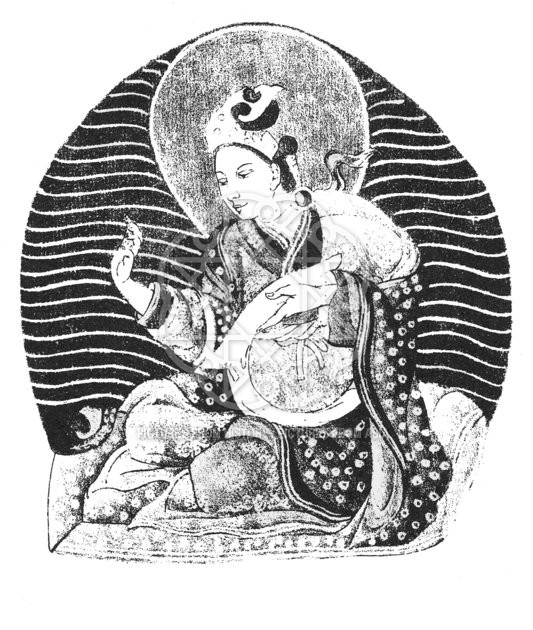
First Rigden King of Shambhala: Manjushri Yashas (159 BC)

**************************

Click Here to View the Main Index

**************************

The Rigdens (Kalkin)....the following 17 kings have the title "Kalki" ("Kulika" may be an incorrect spelling) or "Rigden"-kings; meaning "Holder of the Castes" or the Shambala's Knowledge Holders.

8. FIRST KALKI KING...Jampal Trakpa (Manjushrikiirti)....(1st Kulika King)(1st Propagator): "the 8th King of Sambhala, 'Manjusriyasas ('jam dpal grags pa) was the first to be called Rigden." (Kongtrul: 1995..pg 273)....Jampa Trakpa ('jam dpal grags pa)...Kulika Manjushrikirti initiated 35 million seers into the Kalachakra mandala. He composed a shorter tantra of 5 chapters with 1047 verses. This is what is currently called the Kalachakra Tantra. (Geoffrey Hopkins: 1985..pg 60)...."Rigpan Jampa Dragpa, the first Propagator, was famous for his clear explanations."

"In 624 C.E., a non-Indic religion will arise in Mecca. Because of a lack of unity among the brahmans?people and laxity in following correctly the injunctions of their Vedic scriptures, many will accept this religion when its leaders threaten an invasion. To prevent this danger, Manjushri Yashas united the people of Shambhala into a single "vajra-caste" by conferring upon them the Kalachakra empowerment. By his act, the king became the First Kalki ?the First Holder of the Caste. ........... As the founding of Islam dates from 622 C.E., two years before Kalachakra? predicted date, most scholars identify the non-Indic religion with that faith. Descriptions of the religion elsewhere in the Kalachakra texts as having the slaughter of cattle while reciting the name of its god, circumcision, veiled women, and prayer facing its holy land five times a day reinforce their conclusion."

"As the first Kulika king, Manjushrikirti, preached the Kalachakra Tantra to his subjects, Suryaratha distanced himself from it, and his followers, the Rishis, joined him. They preferred to choose banishment from Shambhala than to follow the “diamond path” (Vajrayana). Nonetheless, after they had set out in the direction of India and had already crossed the border of the kingdom, Manjushrikirti sank in to a deep meditation, stunned the emigrants by magic and ordered demon birds to bring them back. This event probably concerns a confrontation between two religious schools. The Rishis worshipped only the sun. For this reason they also called their guru the “sun chariot” (suryaratha). But the Kulika king had as Kalachakra master and cosmic androgyne united both heavenly orbs in himself. He was the master of sun and moon. His demand of the Rishis that they adopt the teachings of the Kalachakra Tantra was also enacted on a night of the full moon. Manjushrikirti ended his sermon with the words: “If you wish to enter that path, stay here, but if you do not, then leave and go elsewhere; otherwise the doctrines of the barbarians will come to spread even in Shambhala.” (Bernbaum, 1980, p. 234)......The Rishis decided upon the latter. “Since we all want to remain true to the sun chariot, we also do not wish to give up our religion and to join another”, they rejoined (Grünwedel, 1915, p. 77)

"Manjushrí Kírti (Tib. Rigdan Jampel Dakpa) is said to have been born in 159 BCE and ruled over Shambhala which had 300,510 followers of the Mlechha (Yavana or "western") religion living in it, some of whom worshiped the sun. He is said to have expelled all the heretics from his dominions but later, after hearing their petitions, allowed them to return. For their benefit, and the benefit of all living beings, he explained the Kalachakra teachings."....http://en.wikipedia.org/wiki/Kalachakra

In 624 AD the Sassian Shah Yazdigird is defeated by the Arabs at the battle of Nahavand...In Iran, the great Sassanian dynasty collapsed in the 7th century under the Arab onslaught...."in the era of the Mlecchas, the starting year of the Kalacakra chronology is the first year of the Hijra, calculated from the year 624 AD."..(Roerich:1949...pg 753)....

The First Kalki further predicted that the followers of the non-Indic religion will some day rule India. From their capital in Delhi, their king will attempt the conquest of Shambhala in 2424 C.E. The Twenty- fifth Kalki, Raudrachakrin, will then invade India and defeat the non-Indics in a great war. His victory will mark the end of the Kali Yuga, the age of degeneration of the Dharma, and afterwards, a new golden age will follow during which the teachings will flourish, especially those of Kala chakra.

8. (1) Manju Yashas/Manjushrikirti/Manjughoshikirti (Skt), Jampäl Dragpa (Tib)(Jamyang Drag(Tib)) (276 - 176 BC) The Renowned and Glorious Gentle One .......The 8th king, Manjushrikirti was an incarnation of Manjushri and he put the Kalachakra teachings in a condensed and simplified form, called the "Sri Kalachakra". He founded a second line of 25 Kings. He also converted a group of non-Buddhist Brahman priests of Shambala to Buddhism and gave them the Kalachakra initiation to unite all inhabitants into one "vajra family" - or family of tantric practitioners.

Rigden Manjushri Yashas was born as a son of Sureshana....His time on the throne began in 277 BC.....

Yashas and his queen Tara had a son named Pundarika. (Newman...1985)

"All the kings of Shambhala belong to an inherited dynasty. Since the historical Buddha initiated the first regent, Suchandra, into the Time Tantra there have been two royal houses which have determined the fate of the country. The first seven kings called themselves Dharmaraja (kings of law). They were originally descended from the same lineage which produced Buddha Shakyamuni, the Shakyas. The following 25 kings of the second dynasty are the “Kulikas” or “Kalkis”. Each of these rulers reigns for exactly 100 years. The future regents are also already laid down by name.....Like the Indian Maha Siddhas, the Kalkis have long hair which they tie up in a knot. Likewise, they also adorn themselves with earrings and armbands......The highest elite of the country is formed by the tantric clergy. The monks wear white, speak Sanskrit, and are all initiated into the mysteries of the Kalachakra Tantra......http://www.trimondi.de/SDLE/Part-1-10.htm

King Yashas taught the Dharma on the lion throne of Shambhala for one hundred years.His minister was Sagaramait. Full moon of Caitra (Feb-March)...None of the texts authored by Yashas have survived in the original Sanskrit other than the al-important Sri Kalachakra. ...Yashas's conversion of the brahman sages was inportant in the subsequent history of Shambhala...by combining all the castes of Shambhala into one Vajra family, Yashas became Kalki, the lineage King of Shambhala."(Newman ...1985)

"the 1047 verses of the Kalachakra Tantra used today (the original is 12,000 verses) was composed by the eighth King of Shambhala, the first Kulika (Kalki), Jampal Trakpa. The original 12,000 verses have never been translated into Tibetan." (Kongtrul: 1995..pg 271)..

Manjushrikiirti. ..Manjughosha, Majushrikiirti, chief of rigdens, who summarized so well the great vajra tantra, The Jamyang Human Lord Known as Manjushrikiirti, Will arise in the place called Shambhala....Perfecting the glorious tantras, Rigden Manjushrikiirti Will be the teacher of it.

The emanation of Akashagarbha., was born as the son of Lha'i Wangdenís Consort of Delight, or some say of various other divine consorts, and was the emanation of Manjushri, King Manjushrikiirti himself. Seated on a lion throne, he taught the Dharma or 100 years.

Then King Manjushrikiirti said, "Let the followers of the Vedas quickly leave Shambhala." Accordingly, those brahmin .ri.shis abandoned the city of Kaalaapa. Sitting on a great precious lion throne, was Dharmaraaja Jampel Manjushrikiirti.

When the Bhagavan taught the Kaalachakra tantra, a lord of humans explaining it called Jampel or Manjushrikiirti arises in a place called Shambhala, north of the river Shiita. Sitting on the lion throne, he is Dharma-teaching nir.ma.nakaaya. Manjushrikiirti, this describer of the teachings, teaches the commentary. This is by power of composition, as is explained in the earlier commentaries. Manjushrikiirti teaches the abridged tantra and nirvaa.na.

600 years after the Tathaagata taught the Kaalachakra Tantra is the time of Jampel Manjushrikiirti.

Rigden Manjushrikiirti has a fish-like birthplace. He is the 1st stopper of the Lalo dharma.

Therefore, the secret mantra vajra empowerment will be given to the 4 castes, and all the brahmins will be made into a single vajra caste, the Sage's family, and because of that they will be called "rigdens." After that, the 8 kings of Shambhala up to Manjushrikiirti also will be given the name "rigden."

According to the Kaalachakra Root Tantra, 600 years after the Root Tantra is taught, in Shambhala the 1st rigden Manjushrikiirti becomes a Dharma teacher, sitting on the lion throne as prophesied.

Kali Yuga began in 3102 BCE according to the Surya Siddhanta, which is an astronomical treatise that forms the basis of all Hindu and Buddhist calendars.

"the 1047 verses of the Kalachakra Tantra used today (the original is 12,000 verses) was composed by the eighth King of Shambhala, the first Kulika (Kalki), Jampal Trakpa. The original 12,000 verses have never been translated into Tibetan." (Kongtrul: 1995..pg 271)..

Kalkin (Tib: rigs ldan): chieftan, governor who holds the lineage, "one who bears the lineage"

Rigden..."the eighth Rigden and subsequent Kings were called Kulika (rigs ldan) "one who bears the lineage". (Geoffrey Hopkins: 1985..pg 60)...

Kulika or Kalki Kings..."Since the Kalki has many queens, he has many sons and daughters. However, when the Kalki-to-be is born (it does not matter if he is the oldest son or not) there is a rain of white lotus flowers. The queen mother is a daughter of one of the 96 satraps of Shambhala. " (Newman ..1985)

"Sixteen translations of the Sri Kalachakra from Sanskrit to Tibetan appeared between the 11th and 14th centuries." (Bryant: 1992..pg 71)...

"This classification in the Kalachakra is not traditional to Buddhism but to Samkhya (The major text of this Vedic school is the extant Samkhya Karika circa 200 CE. This text (in karika 70) identifies Sāmkhya as a Tantra and its philosophy was one of the main influences both on the rise of the Tantras as a body of literature, as well as Tantra sadhana. The Samkhya school is dualistic and atheistic.). In the Kalachakra there is a great deal of non-Buddhist terminology." (Geoffrey Hopkins: 1985...pg 485)... (chaitya)

"The lam yig's description of Sambhala is a curious melange of elements drawn from the canonical Indian Kalachakra literature (primarily the Vimalaprabha), erstwhile realia (the architecture, diet, and clothing of the Sambhalese), and the obligatory travellers sexology." (Newman in Cabezon:1996...pg 488)...

"The Buddhist myth of the Kalkis of Shambhala derives from the Hindu Kalki of Shambhala myths contained in the Mahabharata and the Puranas." (Newman...1985)

The 7 Shakya Kings and the 25 Kulika Kings (Kalki)...

"Suchandra recorded the Kalachakra Mulatantra from memory and composed a number of comprehensive commentaries on it. One of his successors (Manjushrikirti) wrote an abridged edition, known as the Kalachakra Laghutantra, a compendium of the original sermon. This 1000-verse text has survived in toto and still today serves as a central text. Manjushrikirti’s successor, King Pundarika, composed a detailed commentary upon the Laghutantra with the name of Vimalaprabha (‘immaculate light’). These two texts (the Kalachakra Laghutantra and the Vimalaprapha) were brought back to India in the tenth century by the Maha Siddha Tilopa, and from there reached Tibet, the “Land of Snows” a hundred years later. But only fragments of the original text, the Kalachakra Mulatantra, have survived. The most significant fragment is called Sekkodesha and has been commented upon the Maha Siddha Naropa......http://www.trimondi.de/SDLE/Part-1-10.htm

"Kalki is described as the last of the Maha Avatars of Lord Vishnu, who will appear to end the Kali Yuga or the Dark Age. In Hindu traditions, Kalki (also rendered by some as Kalkin and Kalaki) is the name of the tenth and final Maha Avatara (Great Avatar) of Vishnu the Preserver, who will come to end the current Kali Yuga, (The Age of Darkness and Destruction)......Other similar and divergent interpretations (based on varying etymological derivations from the ancient Sanskrit language, including one simply meaning "White Horse") have been made.....In Hinduism, Kalki (alt. spelling: Kalaki) ('Time") is the tenth and last avatar of Vishnu. Kalki is expected to appear on Earth at the conclusion of the current Kali Yuga; He will come from the sky on a white horse, brandishing a flaming sword with which to destroy the wicked people of the current world, renew creation and bring righteousness back to Earth......According to Hindu scripture, Kali Yuga (the Age of Kali) began at the end of Krishna's bodily lifespan near the end of the 15th century BC and will last exactly 432,000 years - placing its conclusion near the middle of the 431st millennium AD. Kalki, the 10th and final avatar of Vishnu, is expected to appear at this time, riding a white horse and wielding a flaming sword with which to strike down the wicked.".....http://www.crystalinks.com/avatars.html

KALACHAKRA...(dus kyi khor lo)...Taught by the Buddha to Dawa Sangpo in South India in 881 BC (Dudjom:1991 pg 947)...Appeared in India from 966 AD with Chilupa. (Jeffrey Hopkins:1985, pg 61)... Introduced into Tibet from India in 1026 AD.(Norbu:1995,pg 272)... "Shen Rab explained the mighty Kalachakra Tantra in the Palace called dBan chen sa bdag." (Kvaerne: 1971, pg 221)........"the 1047 verses of the Kalachakra Tantra used today (the original is 12,000 verses) was composed by the eighth King of Shambhala, the first Kulika (Kalki), Jampal Trakpa. The original 12,000 verses have never been translated into Tibetan." (Kongtrul: 1995..pg 271)..."The Kalachakra is one of the last Sanskrit works to have been written in a Central Asian land." (Geoffrey Hopkins: 1985..pg 60)..."King Sucandra wrote the 12,000 verse root text to the Kalachakra in an unknown tongue called the 'twilight language.' (Bryant: 1992..pg 68)..."Sixteen translations of the Sri Kalachakra from Sanskrit to Tibetan appeared between the 11th and 14th centuries." (Bryant: 1992..pg 71)...

Chogyam Trungpa on ultimate Shambhala: "the kingdom of Shambhala itself, is not some mysterious heavenly realm. It is the realm of the cosmic mirror, the primordial realm that is always available to human beings if they relax and expand their minds." (Trungpa: 1984..Pg 174)....

"....1) Suchandra (Tib. Dawa Sangpo) c. 900 to 876 BC. Note: the Kalachakra calculations put the life of Shakyamuni Buddha quite a bit earlier than is generally accepted, and the Tibetans produced a number of divergent calculations of the dates given here. Also, many of the names of the kings are often wrongly Sanskritized (back-translated from the Tibetan) in Western publications. 2) Devendra (Tib. Lhayi Wang) (876-776 BC) - Fond of Sentient Beings 3) Tejasvin (Tib. Ziji Chän) (776-676 BC) Bearer of the Dharma Wheel and the Auspicious Conch 4) Somadatta (Tib. Dawä Jin) (676-576) Lord of Speakers 5) Deveshvara/Sureshvara (Tib. Lhaji Wangchug) (576-476) Destroyer of the City of Delusion 6) Vishvamurti (Tib. Natshog Zug) (476-376) Conqueror of False Leaders, Holding a Lotus 7) Sureshana ...."

"Manjushrikirti or Manjughoshikirti (Skt. Mañjuśrīkīrti; Miàojíxiángchēng; ). Manjushrikirti is said to have been the eighth king of Shambhala and is considered to be the second incarnation in the lineage of the Panchen Lamas of Tibet. As his name indicates, is considered to have been an incarnation of Manjushri, the Bodhisattva of Wisdom. Manjushrikirti was born in Shambhala, the son of King Deva-Indra and his queen, Kauśikí. His rule is said to have extended over "hundreds of petty kings and a hundred thousand cities." He is said to have expelled 300,510 followers of heretical doctrine of the Mlechhas or "materialistic barbarians", some of whom worshipped the sun, but after reconsidering, he brought them back and they asked for his teachings. Next he united all the castes, or religious factions, of Shambala into one Vajra or 'Diamond' Caste. Consequentially, he was the first king of Shambhala to be given the title Kalki (Tib. Rigden), meaning "Holder of the Castes" or "Wisdom Holder." He is said Tibetan sources to have taken the throne 674 years after the death of Gautama Buddha. Following the Tibetan sources, which place the parinirvana in 833 BCE, he would have become king of Shambhala in 159 BCE. There is, however, no consensus on the date of the death of the Buddha. Modern scholars have proposed dates of 563, 483, 410 or 400 BCE. These would suggest dates for his accession of 111, 191, 264 or 274 CE respectively. He then put the Kalachakra teachings in a condensed and simplified form called the "Sri Kalachakra" or "Laghutantra"."....From Wikipedia, the free encyclopedia

"It seems as if the legend of Shambhala was at least partially inspired by the Xiongnu Empire which stretched from Mongolia to Central Asia (indeed north of Tian Shan and the several "White Rivers (Sita)"). I wonder if Chandra Bhadra (a.k.a. Suchandra, Skt. "Auspicious Moon") was actually translation of a name or phonetic rendering of the title of the Xiongnu Emperor Shanyu Baghatur (Chanyu Batyr). Baghatur Tengri is Mongolian god of victory, while in Altaic mythology there is such celestial hero (Batyr) similar to Mithra called Mangdyshire whose name is clearly derived from that of Manjushri. In a Bon text cited by Kuznetsov the supreme deity Bumkhri Sangspo is identified with alternative name of Manjushrighosha - same as that of the first Kulika king - contemporary of Shanyu Mode (= Turk. Baghatur/Batyr). "...Posted by Ardavarz to Shamis-en-balkh and Historical Shambhala

**************************

Email....okarresearch@gmail.com

John Hopkins.....Northern New Mexico….February 2013

**************************

Friday, January 25, 2013

The 25 Kalki: Rigden Kings of Shambala

**************************

Kings of Shambala.... There are 32 kings who have ruled or will rule Shambhala. They can be divided into two groups--the first seven are referred to as Dharmarajas or Chogyal, "Truth Kings". The following 25 are referred to as Kalki or Rigden, "Wisdom Holders".

Click Here to View the Main Index

**************************

King of Shambhala....This image is of Taye Namgyal, the twenty-fourth king of Shambhala. ..Tibet, 19th century, Ground Mineral Pigment on Cotton, 27.50x19.12in. © Rubin Museum of Art

The First Vidyadhara (Wisdom-Holder) King of Shambhala, Manjushri Yashas (Beautiful Radiant Fame).....http://www.mfa.org/collections/object/the-first-vidyadhara-wisdom-holder-king-of-shambhala-manjushri-yashas-beautiful-radiant-fame-8499

"Manjushrí Kírti (Tib. Rigdan Jampel Dakpa) is said to have been born in 159 BCE and ruled over Shambhala which had 300,510 followers of the Mlechha (Yavana or "western"..."Greek speakers") religion living in it, some of whom worshiped the sun. He is said to have expelled all the heretics from his dominions but later, after hearing their petitions, allowed them to return. For their benefit, and the benefit of all living beings, he explained the Kalachakra teachings. In 59 BCE he abdicated his throne to his son, Pundarika (Tib. Pema Karpo) (176-76 BCE),...... and died soon afterwards, entering the Sambhoga-káya of Buddhahood."....Das, Sarat Chandra (1882). Contributions on the Religion and History of Tibet.

"Menander I Soter "The Saviour" (known as Milind in Indian sources) was the Indo-Greek king (155 BCE) who established a large empire in the Central Asia and became a patron of Buddhism.....Menander was born in the Caucasus (Hindu Kush Moutains), and was initially a king of Bactria. ....Buddhist tradition relates that he handed over his kingdom to his son, Strato I......
"Tibetan histories and works on Kdla Chakrait may be conjectured that this S'ambhala, very probably, was the capital of the Bactrian Empire of the Eastern Greeks who had embraced Buddhism. It is also conjectured that the modern city of Balkh must have been the site of their latest capital. The name of King Menander {Minendra) who erected a very lofty chaiti/a has been mentioned by the Kashmirian poet Ksomendra, in Avaddna Kalpalatd, a work that was finished iu about 1035 A.D."....http://archive.org/stream/grammaroftibetan00dass/grammaroftibetan00dass_djvu.txt

Kalki Rigden Kings....#1) Yashas..... (Tib. Jampal Dakpa; "Manjushri Yashas") - King Yashas is said to have lived in the second century BCE. He put the Kalachakra teachings in a condensed and simplified form called the "Sri Kalachakra" or "Laghutantra". He also converted a group of non-Buddhist Brahman priests of Shambhala to Buddhism and gave them the Kalachakra initiation, thereby uniting all inhabitants into one "vajra caste," or family of tantric practitioners. He said to have predicted the coming of "barbarian Dharma" after 800 years (about 600 CE), which indicates a form of Islam.....http://en.wikipedia.org/wiki/Kings_of_Shambhala

"Seven generations of kings after Suchandra, in 176 BCE, King Manjushri Yashas gathered the religious leaders of Shambhala, specifically the brahman wise men, to give them predictions and a warning. Eight hundred years in the future, namely in 624 CE, a non-Indic religion will arise in Mecca. Because of a lack of unity among the brahmans’ people and laxity in following correctly the injunctions of their Vedic scriptures, many will accept this religion, far in the future, when its leaders threaten an invasion. To prevent this danger, Manjushri Yashas united the people of Shambhala into a single “vajra-caste” by conferring upon them the Kalachakra empowerment. By his act, the king became the First Kalki – the First Holder of the Caste. He then composed The Abridged Kalachakra Tantra, which is the version of The Kalachakra Tantra that is presently extant."......http://en.wikipedia.org/wiki/Kings_of_Shambhala

Introduction to the Kalachakra Initiation...Page 45..By Alexander Berzon

"In page 193, of his Grammar, Alexander Csoma has the following passage: — The Kdla chakra doctrine of Adi Buddha was delivered by S'akya, in his 80th year, at S'ridhanya Kataka upon the request of Chandra Bhadra, a king of S'ambhala who in his 99th year visited S'akya there. Upon his return home, he compiled the Mula Tantra, in accordance with what he had heard from S'akya, and two years afterwards he died. This work is the source of all the subsequent voluminous compilations, increased modifica- tions and interpolations. In the Mula Tantra, S'akya foretells to Chandra Bhadra 25 kings, who will reign at S'ambhala, each for 100 years. The six first of them are called Dharma Rajds and the others are styled EuUka. He foretells also that after 600 years from that date Kulika Kirti (Ya9okIrti or the Ephiphanes of the Greeks ?) will succeed to the throne of S'ambhala, and that 800 years afterwards the Mleccha or Muhamadan religion will rise at Makha (Mecca)." ......http://archive.org/stream/grammaroftibetan00dass/grammaroftibetan00dass_djvu.txt

"Like the Indian Maha Siddhas, the Kalkis have long hair which they tie up in a knot. Likewise, they also adorn themselves with earrings and armbands. “The Kalki has excellent ministers, generals, and a great many queens. He has a bodyguard, elephants and elephant trainers, horses, chariots, and palanquins. His own wealth and the wealth of his subjects, the power of his magic spells, the nagas, demons, and goblins that serve him, the wealth offered to him by the centaurs and the quality of his food are all such that even the lord of the gods cannot compete with him. ... The Kalki does not have more than one or two heirs, but he has many daughters who are given as vajra ladies during the initiations held on the full moon of Caitra each year” (Newman, 1985, p. 57). It thus appears they serve as mudras in the Kalachakra rituals.".....http://www.american-buddha.com/aggres.myth.htm

"The eighth in Dawa Sangpo’s line, Yasas, an emanation of Manjushri, also received the Kalachakra lineage and taught the tantra for one hundred years. As his reign was drawing to a close, King Yasas foresaw that the Shambhala Kingdom would become vulnerable to barbarian invasion due to the continued adherence of his subjects to divisive caste identities and to sacrificial ritual practices. Yasas gathered the Brahmanic lords from throughout the kingdom and requested them to take initiation in the Kalachakra, and to put aside caste identity to come together as one “Vajra Caste.” The lords eventually agreed, dissolving caste and clan distinctions and abandoning Vedic rituals......Having achieved the unification of all Shambhala under one vajra clan, Yasas became known as the first Kalki King (Rigden in Tibetan). In Tibetan, rig (usually transliterated as rigs) means “family,” “caste” or “kind,” while den (from dang ldan pa) means “endowed with” or “holding.” So Rigden literally means “endowed with family” or “holder of the lineage,” a name representing the bringing together of all castes, clans and religious systems of Shambhala into one.".....Shambhala in the Kalachakra Tantra......By Nick Trautz

"Kalachakra and the VAJRA CASTE...."The purpose of the Vajra Caste was not force everyone to convert to Buddhism but for people to re-discover the purity of their own traditions. The Kalachakra empowerment is given to anyone who wishes to participate. No one is asked to give up their own religion. The Kalachakra, open to all who wish to participate, has the power to benefit all beings on this planet."...https://collab.itc.virginia.edu/access/content/group/9f340e95-f808-4bc0-80bc-b23bcadd072e/copyrighted%20pdfs%20of%20texts/newmanbriefhistorykalachakra.pdf

**************************

Email....okarresearch@gmail.com

**************************

Thursday, January 10, 2013

Rigden King Suchandra of Shambala (878 BC)

**************************

Click Here to View the Main Index

**************************

"Kings of Shambhala......According to Buddhist legend, the first 'notable' king of Shambhala, King Suchandra (or Chandrabhadra, Tib. Dawa Sangpo), was the one who requested teaching from the Buddha that would allow him to practice the dharma without renouncing his worldy enjoyments and responsibilities. In response to his request, the Buddha gave the first Kalachakra root tantra. By practicing the Kalachakra the whole of Shambhala became an enlightened society, with Suchandra as the ruler. He was followed by an additional six Dharmarajas (Truth Kings). His eighth successor, Manjushrikirti, was the first to be known as the Kulika King, to be followed by 24 more leading up to the present day.".... http://rywiki.tsadra.org/index.php/Kings_of_Shambhala 1 The 7 Dharmarajas:
2 The 25 Kulika (Rigden) kings
3 The Kulikas and the Dalai Lama
4 The Lineage of Sakyong Kings
The 7 Dharmarajas
1) King Suchandra/Chandrabhadra (Tib. - chos rgyal zla ba bzang po) (Chogyal Dawa Sangpo) - Suchandra, c. 900 to 876 BC)

The Seven Dharmarajas (Tib. Chogyal)...Seven "SHAKYA" kings of Shambhala

Historical Buddha....about 563 BC - 483 BC.....Born in Lumbini or Kapilavastu (today in Nepal), Died (aged 80) Kushinagar (today in Uttar Pradesh, India)......Buddha was born in a royal Hindu family to King Śuddhodana, the leader of Shakya clan, whose capital was Kapilavastu, and who were later annexed by the growing Kingdom of Kosala during the Buddha's lifetime....Gautama was famously seated under a pipal tree—now known as the Bodhi tree—in Bodh Gaya, India, when he vowed never to arise until he had found the truth. Kaundinya and four other companions, believing that he had abandoned his search and become undisciplined, left. After a reputed 49 days of meditation, at the age of 35, he is said to have attained Enlightenment....525 BC.....

1) Suchandra, (sometimes wrongly Sanskritized as "Chandrabhadra," )
Tibetan: Dawa Sangpo, Zla-ba bZang po,
Old Iranian:

In Tibetan culture and Sherpa culture, Dawa (Tibetan: ཟླཝ, Wylie: zlawa; also written Tibetan: ཟླབ, Wylie: zlaba) is a word meaning "moon" or "month". It is often used as a name for children born on a Monday. The name can be given to either a girl or a boy. Other people in the Himalayan region such as the Ladakhis, the Sikkimese of Northeast India and the Bhutanese people also use the name Dawa in the same sense as the Tibetans.

King Suchandra (sometimes wrongly Sanskritized as "Chandrabhadra," Tib. Dawa Sangpo)

(Tib. Dawa Sangpo) c. 900 to 876 BC. "Note: the Kalachakra calculations put the life of Shakyamuni Buddha quite a bit earlier than is generally accepted, and the Tibetans produced a number of divergent calculations of the dates given here. Also, many of the names of the kings are often wrongly Sanskritized (back-translated from the Tibetan) in Western publications."...http://en.wikipedia.org/wiki/Kings_of_Shambhala

..Dawa Zangpo was the first of the seven "SHAKYA" kings of Shambhala.(Bryant:Wheel of Time Sand Mandala)...

Sucandra died two years after receiving the Kalachakra teachings. The six religious Kings of Shambhala were descended from the Shakya clan......

"The father of Sucandra was Shakya Shambha" (Bernbaum:1980..pg 285)......

"King Dawa Zangpo (Sucandra) (Zla-ba bZang po) (Lord of Humanity)..(Kongtrul: 1995..pg 276)...

"King Suchandra compiled the Kalachakra Tantra in its long form, said to be 12,000 stanza. This version no longer being extant. Suchandra was from Shambhala, near the Tarim river." (Hopkins 1985..pg 60)

Shakya and Shaka notes....The Shakas (Old Iranian: Saka, Sacae nomads, Scythians) In c.130, the Graeco-Bactrian kingdom came to an end: the from the north, the shakas who had often made incursions, broke through, during the reign of King Menandros, conquered Bactria. There, the Shakas turned to Buddhism.

"According to Indian and Tibetan legend, King Suchandra (Tib. Dawa Sangpo) of the northeastern Indian Kingdom of Shambhala was the one who requested teaching from the Buddha that would allow him to practice the dharma without renouncing his worldly enjoyments and responsibilities. In response to his request, the Buddha gave the first Kalachakra tantra initiation....Along with King Suchandra, 96 minor kings and emissaries from Shambhala are also said to have received the teachings......King Suchandra wrote down the Kalachakra teachings he received, composing the 12,000-verse "Mula" or root text, which has not survived. He also built a huge three-dimensional Kalachakra mandala in the center of the kingdom. Suchandra is said to have died only two years after receiving the teachings. The six kings who followed him were known as "dharmarajas" or "truth kings," and each is said to have reigned for over 100 years. The twenty-five rulers that follow them are known as Kalki kings......"...http://en.wikipedia.org/wiki/Suchandra

"It is reported that in the year after buddha Shakyamuni attained Enlightenment,he was asked by King Chandrabhadra of Shambhala to teach the Kalachakra Tantra.The Buddha manifested himself in the form of the Kalachakra meditational deity and gave the full teachings and initiation of this tantra.The kalachakra teaching was then transmitted through a lineage of seven kings and 25 propagators."....http://ritualthanka.com/thanka/index2.php?option=com_virtuemart&page=shop.browse&category_id=11&keyword=&manufacturer_id=0&Itemid=1&orderby=product_name&limitstart=10&pop=1&tmpl=component

"The commentary on the Kalachakra-tantra [probably the first commentary on the Kalachakra-tantra by Chandrabhadra, the king of Shambhala and the first recipient of this teaching] says: One should not buy meat, nor should one offer animals in sacrifice to the gods and ancestral spirits. For the Buddha never allowed "marked meat" to be eaten. And by "marked meat" he meat the flesh of animals that have been killed and purchased for food, as well as animals marked for sacrifice.".....http://www.shabkar.org/scripture/tantras/commentary_kalachakratantra.htm

Tapassu and Bhallika, the first two disciples of Buddha. There are two stupas over their relics. As per a popular legend, Buddhism was introduced in Balkh by Bhallika, one of the first two disciples of Buddha....He was a merchant of the region and had come to Bodhgaya. First Vihara at Balkh was built for Bhallika when he returned home after becoming a Buddhist monk.

"Tapassu and Bhallika.... [Tapassu] and his friend, Bhalluka (Bhalliya), while on their way to Rajagaha, saw the Buddha at the foot of the Rajayatana tree, in the eighth week after the Enlightenment. Urged by a deity, who had been their relation [their mother], they offered the Buddha rice-cakes and honey in a bowl provided by the Four Regent Gods. They became the first lay disciples of the Buddha, and their formula of Refuge contained no reference to the Sangha. According to the Theragatha Commentary, Tapassu and Bhalluka were brothers, sons of a caravan leader of Pokkharavati. Some time later they visited the Buddha at Rajagaha, where he preached to them; Tapassu, thereupon, became a Sotapanna, while Bhaluka entered the Order and became an arahant...."....http://obo.genaud.net/backmatter/appendixes/personalities/tapassu_and_bhallika.htm

Some writers locate Kamsabhoga in Bahlika (Bactria), while others identify Asitanjana with Pokkharavati (Sanskrit Pushkalavat) and locate it to the north of river Kabul and to the south of Hindukush mountain range in the Gandhara-Kamboja area.

Theragatha Commentary (Vol i.48) informs that the birthplace or residence of Tapassu and Bhalluka (or Bhaliya) was Pokkharavati in Ukkala. The sons of the caravan leader (Satthavaha) started journey from Pokkharavati and their destination was Rajagaha (Rajagriha), and according to the Jataka, they on their way to Majjhimadesa (middle India), where they had met and offered food to the Buddha and become his first lay devotees

Ukkala (or Okkala) is the ancient name of Orissa. The Mahabharata mentions the Ukkalas several times in the lists of ancient tribes. But Ukkala of the Buddhist texts which is co-related with names like Asitanjana, Adhisthana, Pokkharavati and Kamsabhoga (said to be native country of caravan leaders Tapassu and Bhalluka, specifically placed in Uttarapatha), therefore, must be located not to the east but to the west of Prithudaka (or Pehova). The territory therefore, inevitably tends to get connected to Pali Pokkharavati (Sanskrit Pushkalavati), which is now known as Charasaddha and is located in north-west frontier province of Pakistan above the confluence of Swat and Kabul rivers.

".....most historians in the early 20th century dated his lifetime as circa 563 BCE to 483 BCE, but more recent opinion dates his death to between 486 and 483 BCE or, according to some, between 411 and 400 BCE.However, at a specialist symposium on this question held in 1988 in Göttingen, the majority of those scholars who presented definite opinions gave dates within 20 years either side of 400 BCE for the Buddha's death......563 BC - 483 BC

Suchandra and all the buddhas And the students of the gurus Offered their beautiful wives, And cherished sons, and daughters, And always-desirable things. Here in the Kaalachakra Tantra the supplicator is King Suchandra. The requestor and supplicator is King Suchandra, the ruler the city of Kaalaapa in the country of Shambhala, extruded from the womb of the lovely Nampar Gyalma, the goddess of his father king Nyima'i.

"There is little recorded history of Shambhala prior to Sucandra. His father was Suryaprabha and his mother was Vijaya. The dynasty belongs to the same Shakya line as Shakayamuni. " (Newman, 1985)

Shambhala Lineage Thangka....The first Sakyong, Trungpa Rinpoche and garuda surrounded by Rigden Kings and Queens....www.sakyongfoundation.org

Suchandra, Dawa Zangpo (878-876 BC?) "Good Moon" (Tibetan)

In 878 BC he constructed a three dimensional mandala of Kalachakra

*************************************************************

The sons of dharmaraaja Suchandra are the wrathful dharmaraajas....(The sources are silent about the careers of the next six kings of Shambhala. We are told that they each reigned for 100 years each...Suchandra's 6 successors, dharmaraajas 2-7 are:

2) Devendra (Tib. Lhayi Wang) (876-776 BC) - Fond of Sentient Beings...Lhawang........Suresvara, Sureshvara, Suresha [lha'i dbang ldan]...In 887 BC the second dharmaraja aascended to the lion throne.....Devendra, Lhayi Wang (876-776) Fond of Sentient Beings, Fusion of the Supreme

3) Tejasvin (Tib. Ziji Chän) (776-676 BC) Bearer of the Dharma Wheel and the Auspicious Conch....Ziji Chang......Teji, Tejin, [zi brjid can].......Ziji Chen.....Tejasvin,Taji Ziji Chän

4) Somadatta (Tib. Dawä Jin) (676-576) Lord of Speakers....Dawe Chin....Somadatta [zla bas sbyin]...Chandradatta/Somadatta, Dawä Jin

5) Deveshvara/Sureshvara (Tib. Lhaji Wangchug) (576-476) Destroyer of the City of Delusion...Lhayi Zuk....Sureshvara, Suresvara II [lha'i dbang phyug]

6) Vishvamurti (Tib. Natshog Zug) (476-376) Conqueror of False Leaders, Holding a Lotus....Natsok Zuk.....Vishvamurtti, Visvamurti [sna tshogs gzugs]....Chitrarupa/Vishvamurti

7) Sureshana (Tib. Lhayi Wangdän) (376-276) Cutter of Delusion, Uprooter of Karma and Klesha....Lhayi Wangden...Sureshana."Hidden Omnipresent One (Khyab jug sbas pa) was the 7th Chieftan of Shambhala. Fifty One years after he ascended the lion throne of the Kingdom of Shambhala, the 1800 year period of barbarism will begin."(Kongtrul: 1995..pg 163)...."the 7th King of Shambhala was called King Yashas, 'the Renowned', predicted the coming of the 'barbarian dharma' after 800 years." (Bryant: 1992..pg 71)...

"The seventh Dharma King of Shambhala, Sureshana and his queen Vishvamata gave birth to a son who was to leave his mark on the subswequent history of Shambhala. He was called Yashas,,,"the Renowned".
Devesha/Sureshana, Lhayi Wangdän (or Päldän?) (376-276) Cutter of Delusion, Uprooter of Karma and Klesha

"Suchandra reigned as the king of Shambhala, a legendary kingdom somewhere to the north of India. He did not travel alone to be initiated in Dhanyakataka, but was accompanied by a courtly retinue of 96 generals, provincial kings and governors. After the initiation he took the tantra teaching back with him to his empire (Shambhala) and made it the state religion there; according to other reports, however, this only happened after seven generations...For centuries the Tibetan lamas have deliberately mystified the wonderland.....http://www.american-buddha.com/aggres.myth.htm#THE%20AGGRESSIVE%20MYTH%20OF%20SHAMBHALA

"It seems as if the legend of Shambhala was at least partially inspired by the Xiongnu Empire which stretched from Mongolia to Central Asia (indeed north of Tian Shan and the several "White Rivers"). I wonder if Chandra Bhadra (a.k.a. Suchandra, Skt. "Auspicious Moon") was actually translation of a name or phonetic rendering of the title of the Xiongnu Emperor Shanyu Baghatur (Chanyu Batyr). Baghatur Tengri is Mongolian god of victory, while in Altaic mythology there is such celestial hero (Batyr) similar to Mithra called Mangdyshire whose name is clearly derived from that of Manjushri. In a Bon text cited by Kuznetsov the supreme deity Bumkhri Sangspo is identified with alternative name of Manjushrighosha - same as that of the first Kulika king - contemporary of Shanyu Mode (= Turk. Baghatur/Batyr). ".....Posted by Ardavarz to Shamis-en-balkh and Historical Shambhala

'I call out to all lineage Masters past and present, Especially the original seven Shambala Masters, And the twenty-five Kalkins of Shambala. Especially I call to Suchandra, who first received this king of tantras, And to Pundarika, who wrote the extensive commentary. By the power of the auspicious qualities of these Masters, May all of our hindrances and imperfections fade away And goodness and joy increase like the waxing moon, Giving rise to a festival of wonder and glory.
From 'An aspiration to fulfil the stages of the glorious Kalachakra path' by the first Panchen Lama, translation Glenn Mullin

**************************

Email....okarresearch@gmail.com

John Hopkins.....Northern New Mexico….January 2013

**************************

<

Friday, November 2, 2012

Kalkin Kings of Sambhala (277 BC)

**************************

Click Here to View the Main Index

Email....okarresearch@gmail.com

**************************

8. FIRST KALKI KING...Jampal Trakpa (Manjushrikiirti)....(1st Kulika King)(1st Propagator): "the 8th King of Sambhala, 'Manjusriyasas ('jam dpal grags pa) was the first to be called Rigden." (Kongtrul: 1995..pg 273)....Jampa Trakpa ('jam dpal grags pa)...Kulika Manjushrikirti initiated 35 million seers into the Kalachakra mandala. He composed a shorter tantra of 5 chapters with 1047 verses. This is what is currently called the Kalachakra Tantra. (Geoffrey Hopkins: 1985..pg 60)...."Rigpan Jampa Dragpa, the first Propagator, was famous for his clear explanations."

"When we asked (Trungpa) about what meaning Gesar had in terms of the Shambhala teachings, Rinpoche exclaimed: “Gesar is the vanguard of Shambhala.” (It should be noted that in other contexts, the Vidyadhara indicated that the Shambhala terma had originated with the Rigden kings, Shiwa Ökar, or Gesar of Ling.).....http://nalandatranslation.org/projects/articles/gesar-supplication/

The Kalki have often been erroneously termed "Kulika" by Tibetan Buddhist scholars unfamiliar with the original Sanskrit texts, as Buddhist scholar John R. Newman explains:....".. . so far no one seems to have examined the Sanskrit Kalachakra texts. The Buddhist myth of the Kalkis of Shambhala derives from the Hindu Kalki of Shambhala myths contained in the Mahabharata and the Puranas. The Vimalaprabha even refers to the Kalkipuranam, probably the latest of the upapuranas. This relationship has been obscured by western scholars who have reconstructed the Tibetan translation term rigs ldan as "Kulika." Although Tibetan rigs ldan is used to translate the Sankrit kulika in other contexts, here it always represents Sanskrit kalkin (possessive of kalkah; I have used the nomininative kalki".....Newman, John L. "A Brief History of the Kalachakra," Wheel of Time: The Kalachakra in Context. Snow Lion: 1985. ISBN :1559390018 pg 84

"Like the Indian Maha Siddhas, the Kalkis have long hair which they tie up in a knot. Likewise, they also adorn themselves with earrings and armbands. “The Kalki has excellent ministers, generals, and a great many queens. He has a bodyguard, elephants and elephant trainers, horses, chariots, and palanquins. His own wealth and the wealth of his subjects, the power of his magic spells, the nagas, demons, and goblins that serve him, the wealth offered to him by the centaurs and the quality of his food are all such that even the lord of the gods cannot compete with him. ... The Kalki does not have more than one or two heirs, but he has many daughters who are given as vajra ladies during the initiations held on the full moon of Caitra each year” (Newman, 1985, p. 57). It thus appears they serve as mudras in the Kalachakra rituals...... http://www.american-buddha.com/aggres.myth.htm#THE%20AGGRESSIVE%20MYTH%20OF%20SHAMBHALA

******************************************************

the Rigdens (Kalkin).... The following 17 kings have the title "Kalki" ("Kulika" may be an incorrect spelling) or "Rigden"-kings; meaning "Holder of the Castes" or the Shambala's Knowledge Holders.

8. FIRST KALKI KING...Jampal Trakpa (Manjushrikiirti)....(1st Kulika King)(1st Propagator): "the 8th King of Sambhala, 'Manjusriyasas ('jam dpal grags pa) was the first to be called Rigden." (Kongtrul: 1995..pg 273)....Jampa Trakpa ('jam dpal grags pa)...Kulika Manjushrikirti initiated 35 million seers into the Kalachakra mandala. He composed a shorter tantra of 5 chapters with 1047 verses. This is what is currently called the Kalachakra Tantra. (Geoffrey Hopkins: 1985..pg 60)...."Rigpan Jampa Dragpa, the first Propagator, was famous for his clear explanations."

"In 624 C.E., a non-Indic religion will arise in Mecca. Because of a lack of unity among the brahmans?people and laxity in following correctly the injunctions of their Vedic scriptures, many will accept this religion when its leaders threaten an invasion. To prevent this danger, Manjushri Yashas united the people of Shambhala into a single "vajra-caste" by conferring upon them the Kalachakra empowerment. By his act, the king became the First Kalki ?the First Holder of the Caste. ........... As the founding of Islam dates from 622 C.E., two years before Kalachakra? predicted date, most scholars identify the non-Indic religion with that faith. Descriptions of the religion elsewhere in the Kalachakra texts as having the slaughter of cattle while reciting the name of its god, circumcision, veiled women, and prayer facing its holy land five times a day reinforce their conclusion."

In 624 AD the Sassian Shah Yazdigird is defeated by the Arabs at the battle of Nahavand...In Iran, the great Sassanian dynasty collapsed in the 7th century under the Arab onslaught...."in the era of the Mlecchas, the starting year of the Kalacakra chronology is the first year of the Hijra, calculated from the year 624 AD."..(Roerich:1949...pg 753)....

The First Kalki further predicted that the followers of the non-Indic religion will some day rule India. From their capital in Delhi, their king will attempt the conquest of Shambhala in 2424 C.E. The Twenty- fifth Kalki, Raudrachakrin, will then invade India and defeat the non-Indics in a great war. His victory will mark the end of the Kali Yuga, the age of degeneration of the Dharma, and afterwards, a new golden age will follow during which the teachings will flourish, especially those of Kala chakra.

8. (1) Manju Yashas/Manjushrikirti/Manjughoshikirti (Skt), Jampäl Dragpa (Tib)(Jamyang Drag(Tib)) (276 - 176 BC) The Renowned and Glorious Gentle One .......The 8th king, Manjushrikirti was an incarnation of Manjushri and he put the Kalachakra teachings in a condensed and simplified form, called the "Sri Kalachakra". He founded a second line of 25 Kings. He also converted a group of non-Buddhist Brahman priests of Shambala to Buddhism and gave them the Kalachakra initiation to unite all inhabitants into one "vajra family" - or family of tantric practitioners.

Rigden Manjushri Yashas was born as a son of Sureshana....His time on the throne began in 277 BC.....

Yashas and his queen Tara had a son named Pundarika. (Newman...1985)

King Yashas taught the Dharma on the lion throne of Shambhala for one hundred years.His minister was Sagaramait. Full moon of Caitra (Feb-March)...None of the texts authored by Yashas have survived in the original Sanskrit other than the al-important Sri Kalachakra. ...Yashas's conversion of the brahman sages was inportant in the subsequent history of Shambhala...by combining all the castes of Shambhala into one Vajra family, Yashas became Kalki, the lineage King of Shambhala."(Newman ...1985)

"the 1047 verses of the Kalachakra Tantra used today (the original is 12,000 verses) was composed by the eighth King of Shambhala, the first Kulika (Kalki), Jampal Trakpa. The original 12,000 verses have never been translated into Tibetan." (Kongtrul: 1995..pg 271)..

Manjushrikiirti. ..Manjughosha, Majushrikiirti, chief of rigdens, who summarized so well the great vajra tantra, The Jamyang Human Lord Known as Manjushrikiirti, Will arise in the place called Shambhala....Perfecting the glorious tantras, Rigden Manjushrikiirti Will be the teacher of it.

The emanation of Akashagarbha., was born as the son of Lha'i Wangdenís Consort of Delight, or some say of various other divine consorts, and was the emanation of Manjushri, King Manjushrikiirti himself. Seated on a lion throne, he taught the Dharma or 100 years.

Then King Manjushrikiirti said, "Let the followers of the Vedas quickly leave Shambhala." Accordingly, those brahmin .ri.shis abandoned the city of Kaalaapa. Sitting on a great precious lion throne, was Dharmaraaja Jampel Manjushrikiirti.

When the Bhagavan taught the Kaalachakra tantra, a lord of humans explaining it called Jampel or Manjushrikiirti arises in a place called Shambhala, north of the river Shiita. Sitting on the lion throne, he is Dharma-teaching nir.ma.nakaaya. Manjushrikiirti, this describer of the teachings, teaches the commentary. This is by power of composition, as is explained in the earlier commentaries. Manjushrikiirti teaches the abridged tantra and nirvaa.na.

600 years after the Tathaagata taught the Kaalachakra Tantra is the time of Jampel Manjushrikiirti.

Rigden Manjushrikiirti has a fish-like birthplace. He is the 1st stopper of the Lalo dharma.

Therefore, the secret mantra vajra empowerment will be given to the 4 castes, and all the brahmins will be made into a single vajra caste, the Sage's family, and because of that they will be called "rigdens." After that, the 8 kings of Shambhala up to Manjushrikiirti also will be given the name "rigden."

According to the Kaalachakra Root Tantra, 600 years after the Root Tantra is taught, in Shambhala the 1st rigden Manjushrikiirti becomes a Dharma teacher, sitting on the lion throne as prophesied.

"Manjushrí Kírti (Tib. Rigdan Jampel Dakpa) is said to have been born in 159 BCE and ruled over Shambhala which had 300,510 followers of the Mlechha (Yavana or "western") religion living in it, some of whom worshiped the sun. He is said to have expelled all the heretics from his dominions but later, after hearing their petitions, allowed them to return. For their benefit, and the benefit of all living beings, he explained the Kalachakra teachings. In 59 BCE he abdicated his throne to his son, Puṇdaŕika, and died soon afterwards, entering the Sambhoga-káya of Buddhahood.

"In another version of the story, after much discussion and controversy in which King Manjushtikirti called for all citizens to engage in the Kalachakra teachings, the Mlechha factions decided to leave the kingdom. They set out, but over days became lost in the wilderness, upset and demoralized. Through magic, Manjushrikirti made them fall asleep. He sent troops to gather them up and bring them back to the Kingdom. When they awoke, Manjushrikirti's minister was there, suggesting that they ask the King for the teachings. They suddenly felt much better and happy to be back home. They asked for the teachings and the kingdom stayed together. Eventually, all the inhabitants gained enlightenment through Kalachakra practice."....http://en.wikipedia.org/wiki/Kalachakra

"In a Bon text cited by Kuznetsov the supreme deity Bumkhri Sangspo is identified with alternative name of Manjushrighosha - same as that of the first Kulika king - contemporary of Shanyu Mode (= Turk. Baghatur/Batyr). ....Posted by Ardavarz to Shamis-en-balkh and Historical Shambhala

********************************************

9. SECOND KALKI KING......Padma Karpo (Pema Karpo)....(2nd Kulika King)(2nd Propagator): Padma Karpo (Pundarika)(Pama Karpo)composed the most famous exposition on the Tantra. Eight Hundred years after Pundarika (176 BC???), in 624 A.D. a Moslem invasion weakened the Kingdom." (Geoffrey Hopkins: 1985..pg 60)...."the 8th King of Shambhala, Pundarika, was the son of King Yashas."..(Bryant: 1992..pg 71)..."The 2nd Propagator, Rigpan Pama Karpo wrote the most esteemed commentary, the Dri-me-wo. These were hidden for over a 1000 years before coming to India during the 12th Propagator."....."Kalachakrapada, one of the first exponents of the Kalachakra School, wrote a commentary on the 'Vimalaprabhatika of Sri Pundarika', Pundarika's detailed commentary to the Laghukalacakratantra." (Orofino: 1996...pg 142)...

9. (2) Pundarika, Päma Kar(po) (176-76 BC) White Lotus, Cherished by the Lord of Potala............The 9th king, Pundarika or "White Lotus" was an incarnation of Avalokiteshvara, and he wrote a commentary called "Vimalaprabha" (Skt.) or "Stainless Light". The Sri Kalachakra and the Vimalaprabha together comprise all the source texts of the Kalachakra system. All other available texts are commentaries to these root texts.

Yashas and his queen Tara had a son named Pundarika. Yashas appointed Pundarika as the second Kalki and ordered him to write a commentary on the Sri Kalachakra; then Yashas passed away. Kalki Pundarika followed his father's command and wrote the Vimalaprabha. This huge commentary is the basic textual source for the Kalachakra system as a whole. The Vimalaprabha survives in the original Sanskrit. "(Newman...1985)

Without doubt, on the south bank of the river Shiita, in the 10 million villages of the space realm, in the 8th hundred years, the dharma of the Lalos completely take over. Moreover, after Pu.n.daarika sits on the throne the beginning of the reign of Shintu Sangpo is when 800 years of the rigdens sitting on the throne is completed.

2 Pu.n.dariika [pa dma dkar po]...Grasping his summary The producer of commentary Will be Pu.n.dariika.....Then Rigden Pu.n.dariika....The Tantra by Jampel Dorje Will have a commentary By Pu.n.darika himself.

************************************************

10. THIRD KALKI KING....Zangpo.....Bhadra [bzang po].......10. (3) Bhadra, Zangpo * One who Rules by the Thousand-spoked wheel

11. FOURTH KALKI KING......Namgyal...Vijaya [rnam rgyal].......11. (4) Vijaya, Namgyäl (#3:Nampar Gyäl) * Attractor of Wealth, Victorious in War

12. FIFTH KALKI KING....Shenyen Zangpo.....Sumitra [dge bshes bzang po]...........12. (5) MitrabhadraSumitra, Shenyen Zangpo (327-427) Integrator of Method and Wisdom, Victorious over Samsara

13. SIXTH KALKI KING....Chakna Rinchen......Raktapani [phyag dmar, rin chen phyag]...... 13. (6) Ratnapani/Raktapani, Rinchen Chag (427-527) Holder of the Blissful Vajra and Bell

14. SEVENTH KALKI KING.....Khyabjuk Bepa......15.(?) : Khyabjuk Bepa..."the 7th King of Shambhala, Khyab-jug sbas pa (Hidden Omnipresent One)"..(Kongtrul: 1995..pg 274)........Vi.s.nugupta [khyab a'jug gsang po/ sbal pa]...The 6 from Pu.n.dariika to Vi.sh.nugupta Bepa have the tortoise birthplace....from Suchandra to Lha'i Wangden, the 7 dharmaraajas...........14. (7) Vishnugupta, Kyabjug Bäpa (527-627) Smiling Holder of the Trident and Rosary

16. EIGHT KALKI KING.....Nyima Trak........Arkakirtti.....ArkakI Irti nyi ma drags pa]....Arkakiirti [kulika 8]...The 8th will be glorious Drakpa.î..........15. (8) Suryakirti/Arkakirti, Nyima Drag(pa) (627-727) Annihilator of Wild Demons

17. NINTH KALKI KING.....Shintu Zangpo.......Subhadra [nyi ma [shin tu] bzang po]... the 7 from Subhadra to Da'ˆ have the pig birthplace.... Shintu Sangpo pass. [[kulika 9 Subhadra]........ 16. (9) Subhadra, Shintu Zangpo (727-827) Holder of the Sword and Shield

18. TENTH KALKI KING.....Gyatso Namgyal...Beginning of the Fire Sky Ocean era.......10th rigden is Samudraavijaya. He sits on the throne, having taught the Dharma, for 182 years. After the 10th rigden, Gyamtso Namgyal comes to the throne, he teaches the Dharma for 182 years. Those are recorded as his years on the throne In the year of Gyamtso Namgyal coming to the throne, the Lalos teach that their formula astrology begins with the 7th outsider Lalo teacher. He is the teacher of it.........The outsider formula astrology begins from the 1st year of Gyamtso Namgyal coming to the throne.....According to year counted as that of the main teaching of the Kaalachakra Tantra, 500 years later is the year of Samudraavijaya going to the throne, and not far from that, the time of King Songtsen Gampo

17. (10) Samudra Vijaya, Gyatso Namgyäl (827-927) Annihilator of all types of Devils

Some say that Samudraa and Vijaya, or Gyamtso and Namgyal, in the case of the 10th rigden Samudravijaya/ Gyatso Namgyal, should be counted as different, so that 25 rigdens are produced;

19. ELEVENTH KALKI KING......Aja......Gyal Ka.....(11th Kulika King): "Rigden rgyal dKa (11th Kulika Durjaya) introduced the lesser Kalachakra chronology in 806 AD." (Roerich: 1974..pg 754)..

18. (11) Durjaya/Aja, Gyälka (927-1027) Who binds with Unbreakable Iron Chains

11th rigden is Aja. He sits on the throne and grasps the leadership of action. He sits on the throne 221 years, after he teaches the Ddharma,...After that, Rigden Gyalka comes to the throne and teaches the Dharma for 221 years. ...The 7th teacher of the Lalos, Madhumati, [[often identified with Mohammed]] can be fully established. By the lord of the Lalos, their leader or guru, Madhumati, the year when the formula astrology began, 403 is diminished by lag pa gdengs can zla ba, 182. That is the year when the formula astrology of rigden Gyalka began. Like the formula astrology produced by rigden Gyalka, this tantra also will be taught in the future.

20. TWELTH KALKI KING......Surya....Nyima (Who was the 12th Propagator...Kalachakra to India during the 12th Propagator)...

He ascended the throne in the year 1027 AD...and the first Rabjung began then in Tibet.....

19. (12) Surya/Suryapada, (Wonang) Nyima (1027-1127) All-Pervading, Radiant Jewel Light

"According to the 'Bro tradition, the Kalachakra was brought to India during the reign of Kalki Shripala. He taught to Kalachakrapada (who had been born in North Bengal). The Kalachakra system first appeared in India at the beginning of the 11th century. (1012 AD). This dates forms the basis for all the astronomical calculations in the Kalachakra laghukaranam." (Newman...1985)

Surya [nyi ma]12th rigden, Surya, comes to the throne. In this year the 1st Rabjung of the conventional system begins with the Fire Rabbit year, and after that, the 403 years of the Lalos entering "me mkha'a rgya mtsho" [403 years] as above, begin with the Rabjung count.From Nyima there are 14 rigdens In the year of rigden Nyima coming to the throne, the Kaalachakra Abridged Tantra goes to the noble land of India. The astrological conventions of the 1st rabjung etc. are also engendered. The formula astrologers who first calculate the years of the rabjung are as well known as the 1st planet, the sun. That is 403 years from the beginning of the formula astrology. "Me mkha'a rgya mtsho", 403, equals the number of years that Gyamtso Namgyal and Gyalka are on the throne of Shambhala

In this account, Lanshi 藍市 [Lan-shih] must surely stand for Bactra, as Burton Watson indicates, as it was certainly the largest city and greatest trading centre in the region..... Lanshi (identified as Bactra or modern Balkh), which Burton Watson and others have identified as the country’s “capital.” In the above passage it is quite clear that the country was not ruled by an overall king located in Lanshì nor was there any central administration of the country from that city......Zhang Qian carefully notes that, “It [Bactria] has no great ruler but only a number of kings ruling the various cities.” The Chinese word used to describe the status of Lanshi is du 都 [tu] which can mean either the capital (of a country) or, preferably here, a large town, city or metropolis. It is clear from the context that the latter is the sense in which it should be interpreted in this context. See Dorn’eich (1999b), p. 40; GR No. 11668; CED, p. 291

Ardavarz Saudar Commented.....January 9, 2013 2:40 PM.... "It seems that the kings of Shambhala as represented in the Kalachakra tradition follow the archetype of the Xiongnu (Eastern Hunnic) political structure. The great Xiongnu Empire was founded by Modu Shanyu who was most likely the prototype of Oghuz Khan - the legendary ancestor of Turkic people in Central Asia. The time of his reign (209 - 174 B.C.E.) roughly corresponds to the period ascribed to Manjushriyashas (Tib. Jampal Dakpa) - the first Kulikaraja (Tib. Rigden) of Shambhala. The Chinese chronicles tell that he conquered many territories westward including the country of Kangyu called "right (western) wing" of the Xiongnu Empire and identified by some scholars as Khwarezm (Chorasmia). The name "Kangyu" seems to correspond to Avestan Kangha which is the Zoroastrian counterpart of Shambhala. In early Middle Ages there lived the tribe of Varkhons (Ouar-Khonitai, Uar-Huns) known also as "White Huns" ("Ouar" probably represents "Khwar" from Khwarezm - Iranian "Khwar-zem" - land of Khwar or "Sun", thus Ouar-Khon becomes "sunny, i.e. light/white" Huns). It is an interesting question whether those Ouar-Khuns are somehow related to the Kinnauri people (called also Kanauri, Kanor, Koonawur, or Kunawar = Khun-Ouars?) whose language is identified as kindred to Zhang Zhung of the Bon texts and related there with Shambhala. Some more recent beliefs put Shambhala in Mongolia which was also part of the ancient Xiongnu Empire. According to the Chinese chronicles the Shanyu (the Hunnic Emperor) was surrounded by six high dignitaries from royal origin (Chinese chronicles designate them as kings - wang) who constituted the imperial government, then there were 24 clan leaders of the major tribes (ta cheng or "great ministers" in Chinese). In the Turkic epic those were represented by Oghuz Khan, his 6 sons and 24 grandsons - forefathers of the tribes. Likewise in Shambhala we have 6 Dharmarajas following the king Suchandra and then 24 Kulikarajas following the king Manjushriyashas (Modu Shanyu?). (In Sanskrit kula means "family, clan, tribe", so kulika-raja can be interpreted as "tribal or clan king"). In Kalachakra chronology they are distributed in time covering a period of more than three millenia. The last Kulika king Raudra Charkin is prophesized to appear from Shambhala in the outside world ca. 2424 C.E. in order to defeat the forces of evil. Similarly in the Zoroastrian eschatology the Saviour (Soshyans) will come together with the king Kay Khosrow from Kangha (the immortal city) 3000 years after Zarathushtra (Zoroaster). If we take the traditional date of his epoch - "258 years before Iskandar (Alexander the Great)", i.e. 569 B.C.E. - this would show the end of the three-millenuum period around the same time - 2431 C.E."....http://shakadvipa.blogspot.com/

**************************

Email....okarresearch@gmail.com

John Hopkins.....Northern New Mexico….November 2012

**************************

Rigden Kings of Shambhala (881 BC)

**************************

Click Here to View the Main Index

Email....okarresearch@gmail.com

**************************

KALACHAKRA...(dus kyi khor lo)...Taught by the Buddha to Dawa Sangpo in South India in 881 BC (Dudjom:1991 pg 947)

"...when you contact the wisdom of the cosmic mirror, you are meeting the ultimate dralas, the Rigden kings of Shambhala. Once having made a connection to ultimate drala, it is possible for the primordial wisdom and vision of the Rigden kings to be passed down to the level of human perception. The vastness of perception can be captured in simplicity, a single perception, on the spot. When we allow vastness to enter our perception, then it becomes drala; it becomes brilliant and luminous—magical. When we have this experience, then we are meeting what are called the inner dralas. The inner dralas are empowered by the wisdom of the cosmic mirror, the Rigdens, to manifest brilliance and elegance in this phenomenal world."..From Shambhala: The Sacred Path of the Warrior, by Chögyam Trungpa; © 1984

"It is also worth noting that rigdzin (rig ‘dzin) translates the Sanskrit vidyadhara, or “awareness holder,” which became Trungpa Rinpoche’s main title, given to him by H.H. Dudjom Rinpoche. Vidyadhara is also translated as “knowledge holder,” and Trungpa Rinpoche sometimes used the phrase “crazy-wisdom holder.” Also, it is important to note that rigdzin is different than the Shambhala term and title Rigden. While the first syllable of rigden sounds the same, it is a different word and is spelled differently in Tibetan (rigs Idan). It most often means “endowed with a [noble] family” as the Rigden King is the one who unifies the kingdom and bring all subjects into one vajra family lineage..."....http://nalandatranslation.org/offerings/choosing-the-right-word/rikpa/

ASURA RIGDENS....."The Rigdens other than Rigden Raudrachakrin are of the Asura family because of bestowing fear.....Palden Raudrachakrin having a short spear bestows fear in the asura family.(Mipham)... "http://www.scribd.com/doc/99775539/Mipham-on-Kalachakra

In the Indian Buddhist tradition the Asura Gods are generally referred to as "Jealous Gods".....Trungpa once said that in the Shambhala tradition the Asura are referred to as "Feisty Gods".....

" The linguistic history indicates that the Aryans ("Indo-Europeans"..."Iran"....) originally formed a single people until the beginning of the 2nd millenium BC when the Deva worshipping Indian Aryans and the Asura worshiping Iranian Aryans went separate ways." (Yarshater: 1987..pg 684)...The Kalachakra discusses the expulsion of the Deva worshippers from Shambhala and refers to the Rigden kings as Asura...... "
Rigden..."the eighth Rigden and subsequent Kings were called Kulika (rigs ldan) "one who bears the lineage". (Hopkins: 1985..pg 60)...

Kulika or Kalki Kings..."Since the Kalki has many queens, he has many sons and daughters. However, when the Kalki-to-be is born (it does not matter if he is the oldest son or not) there is a rain of white lotus flowers. The queen mother is a daughter of one of the 96 satraps of Shambhala. " (Newman ..1985)

The Mongolian term "Khalkha" (or Халх) has always puzzled linguists and historians. One possible interpretation is that it share the same root with the words "Халхавч" or "Shield" and "Халхлах" or to protect; to cover; to shield; to hide; to intercept; etc.

RIG....In Ancient Persia, the Indo-European words for King (Sanskrit: rajan...Latin: rex...Old Iranian: Rig...Gallic: rix)(Lincoln: 1981..pg 35)..means not only to regulate and direct in a manner that is right but also to shine with luster (Sk: raj). The divine right of the king was derived from the brilliance (cihr) and sovereignty (sahr) of the sky itself; therefore it was fitting that his palace should be in the 'padak' of the sun and that his 'tiara' should resemble the surrounding sky-wall and rays of the sun." ..(Campbell: 1968..pg 101)........

DEN...."In ancient Persia, 'Den' was the Old-Iranian term for wisdom. 'Den' operates as a creator within the limits of cyclic time and the motions of matter and space. 'Daena-Den' was an intermediate Creator between space and time. 'Den' reveals the Expanding (Spenta) and Good (Vohu) Mind (Mainyu) all that happens until the 'Fraskart' (The final restoration of the world)" ..(Campbell: 1968..pg 119+)

Kalkin (Tib: rigs ldan): chieftan, governor who holds the lineage, "one who bears the lineage"

The 7 Shakya Kings and the 25 Kulika Kings (Kalki)...

"Only 25 kings of Shambhala are specifically mentioned in the Wheel of Time Tantra and the names of their descendants are not given." (Kongtrul: 1995..pg 46)

"The country of Sambhala, protected by the 32 chieftans." (Kongtrul: 1995..pg 153)...

"the 1047 verses of the Kalachakra Tantra used today (the original is 12,000 verses) was composed by the eighth King of Shambhala, the first Kulika (Kalki), Jampal Trakpa. The original 12,000 verses have never been translated into Tibetan." (Kongtrul: 1995..pg 271)..

"The Kalachakra is one of the last Sanskrit works to have been written in a Central Asian land." (Geoffrey Hopkins: 1985..pg 60)...

"King Sucandra wrote the 12,000 verse root text to the Kalachakra in an unknown tongue called the 'twilight language.' (sāṃdhyābhāṣā ...secret symbolic language)(Bryant: 1992..pg 68)...

"Sixteen translations of the Sri Kalachakra from Sanskrit to Tibetan appeared between the 11th and 14th centuries." (Bryant: 1992..pg 71)...

"Kalachakra taught at Dhanyakatanka, a huge, many leveled monument" (Hopkins: 1985..pg 59)....

"The lam yig's description of Sambhala is a curious melange of elements drawn from the canonical Indian Kalachakra literature (primarily the Vimalaprabha), erstwhile realia (the architecture, diet, and clothing of the Sambhalese), and the obligatory travellers sexology." (Newman in Cabezon:1996...pg 488)...

"The imperial rulers of Shambhala, who are called the Rigden Kings, are inhabitants of the cosmic mirror. They are referred to as ultimate drala. When you contact the wisdom of the cosmic mirror, you are meeting the ultimate dralas, the Rigden kings of Shambhala. Their vast vision lies behind all the activities of mankind, in the open, unconditioned space of mind itself. In that way, they watch over and protect human affairs, so to speak. This is quite different from the notion that the Rigdens are living on some celestial plane, from which they look down at the earth." (Trungpa: 1984..pg 174-175)...

"In Shambhala, the Kalki (the lineage king of Shambhala) and his queens possess the four aims of life: sensual pleasure, wealth, ethics, and liberation. They never become sick or old, and although they always enjoy sensual pleasure, their virtue never decreases. The Kalki does not have more than one or two heirs, but he has many daughters who are given as vajra ladies during the iniations held on the full moon of the Caitra each year....The houses in the villages of Shambhala are two storey houses. The people have find bodies and appearances and they are very wealthy. The men of Shambhala wear caps, and white or red cotton clothes. Women wear white or blue garments pleated and patterned with beautiful designs." (John R. Newman....1985)

In page 193, of his Grammar, Alexander Csoma has the following passage: — " The Kdla chakra doctrine of Adi Buddha was delivered by S'akya, in his 80th year, at S'ridhanya Kataka upon the request of Chandra Bhadra, a king of S'ambhala who in his 99th year visited S'akya there. Upon his return home, he compiled the Mula Tantra, in accordance with what he had heard from S'akya, and two years afterwards he died. This work is the source of all the subsequent voluminous compilations, increased modifica- tions and interpolations. In the Mula Tantra, S'akya foretells to Chandra Bhadra 25 kings, who will reign at S'ambhala, each for 100 years. The six first of them are called Dharma Rajds and the others are styled EuUka. He foretells also that after 600 years from that date Kulika Kirti (Ya9okIrti or the Ephiphanes of the Greeks ?) will succeed to the throne of S'ambhala, and that 800 years afterwards the Mleccha or Muhamadan religion will rise at Makha (Mecca)." ....http://archive.org/stream/grammaroftibetan00dass/grammaroftibetan00dass_djvu.txt

**************************

Email....okarresearch@gmail.com

John Hopkins.....Northern New Mexico….November 2012

**************************